
Who is St. Anthony of Padua? His life and legacy
Author: Eli Pacheco
Date Published: June 03, 2026
St. Anthony of Padua (1195–1231) is widely known as the patron saint of lost things, but his legacy extends far beyond this claim to fame. A Franciscan friar, renowned preacher and model of Scripture virtues, he was deeply devoted to the poor and forgotten. These are the qualities that have made him one of the Church’s most beloved saints.
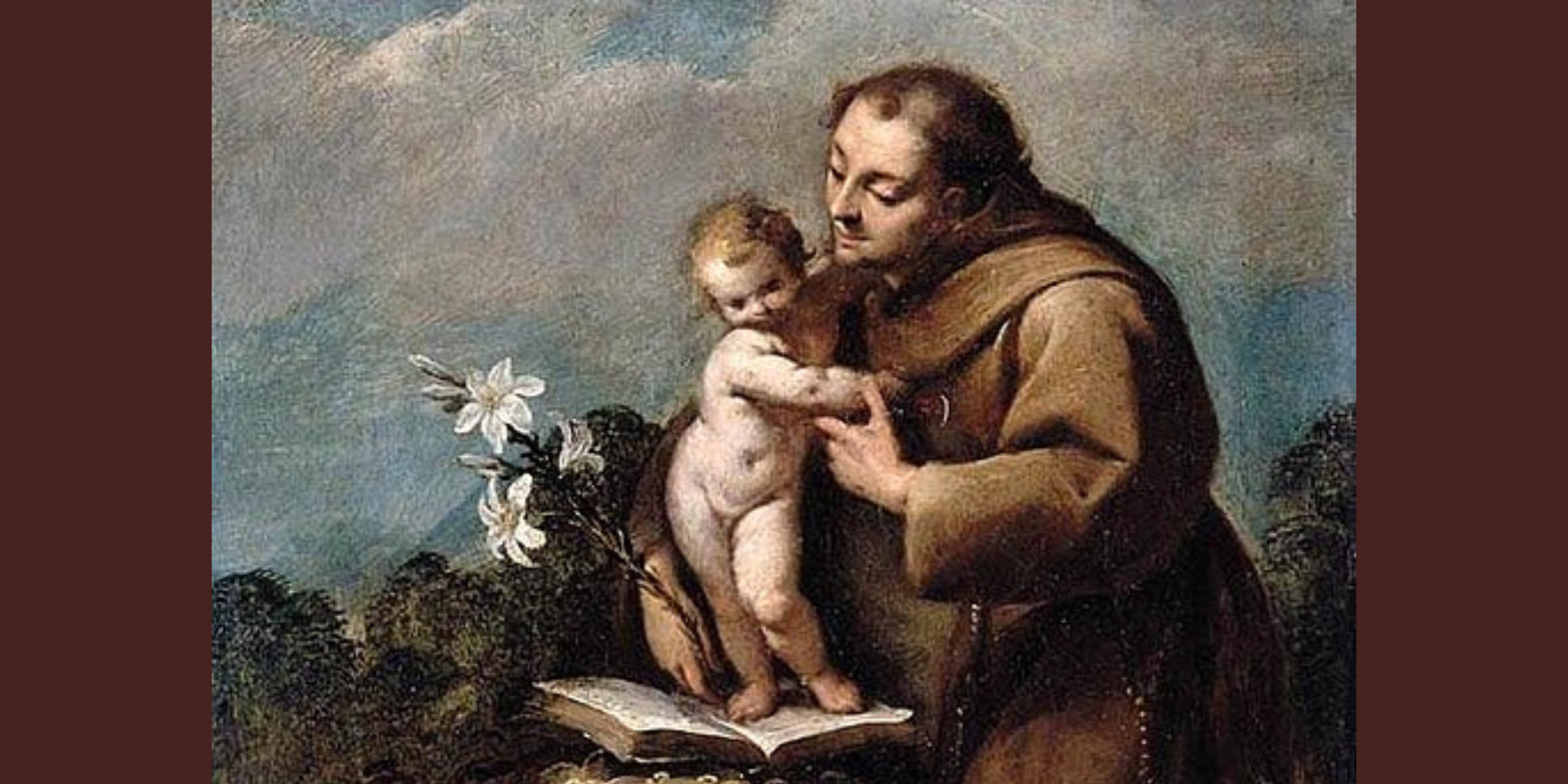
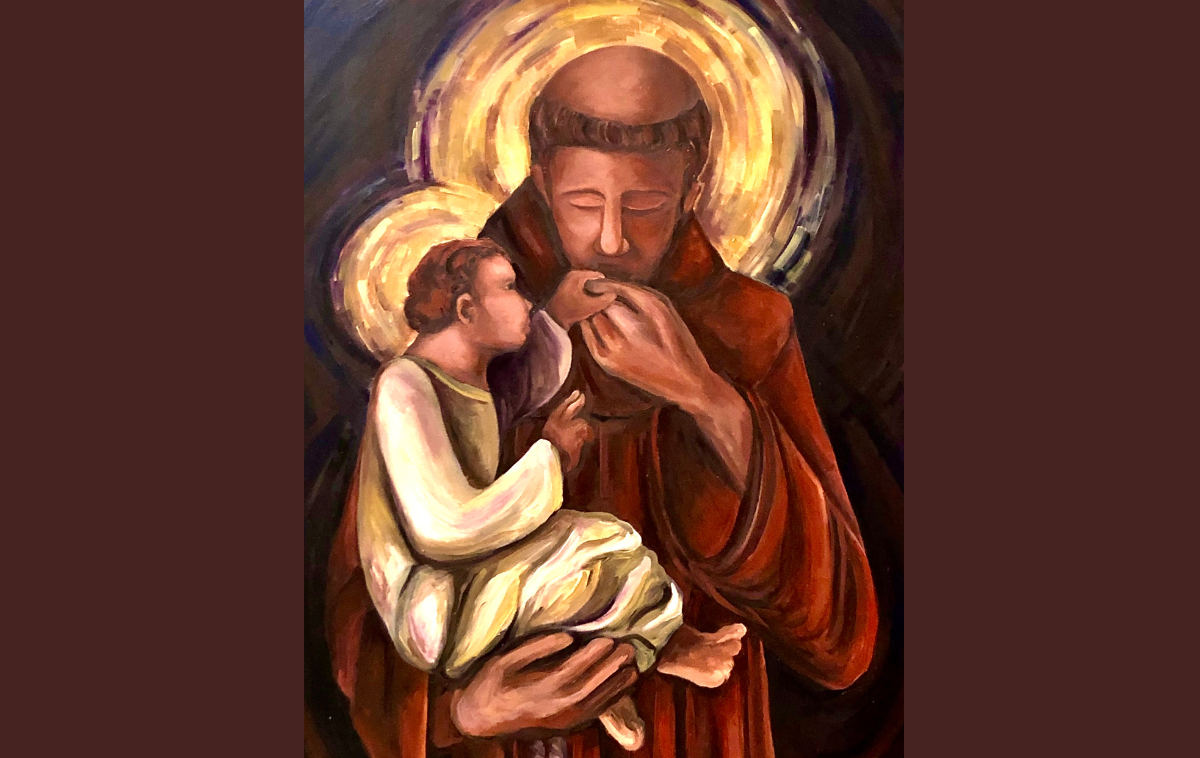
Often depicted holding the Christ Child, a book or a lily, St. Anthony is a symbol of faith, humility and trust in God’s providence. He continues to assist people in need with his heavenly prayers.
Born Fernando Martins de Bulhões on Aug. 15, 1195, in Lisbon, Portugal, Anthony came from a wealthy family but chose a life of religious piety early on. At 15, he joined the community of Canons Regular at the Abbey of St. Vincent, beginning a journey that would eventually lead him to the Franciscan Order and a life of preaching, service and evangelization.
Recognizing his potential for study, his community sent him to the Abbey of the Holy Cross in Coimbra, Portugal, where he spent years immersed in theology, Scripture and the intellectual traditions of the Church. He was ordained to the priesthood and appointed the Abbey’s guest master, a role that required both hospitality and discipline. Yet, even in this structured life, Anthony felt called to something more.
Fernando Martins de Bulhões took the name Anthony after the patron of their hermitage, St. Anthony of Egypt, and hoped to become a missionary. (Word of God, by Br. Michael Reyes, OFM)
How St. Anthony became a Franciscan
In 1219, Fernando encountered
five Franciscan friars who were enroute to Morocco to preach the faith
to the Muslim community. Less than a year later, news arrived that they
had become the first martyrs of the Franciscan Order. As their bodies
were processed through Coimbra, Fernando was so inspired by their
witness that he went to a nearby hermitage and asked to join the
Franciscans, saying:
“Brother,
I would gladly put on the habit of your Order if you would promise to
send me as soon as possible to the land of the Saracens, that I may gain
the crown of the holy martyrs.”
He
took the name Anthony after the patron of their hermitage, St. Anthony
of Egypt, and hoped to become a missionary. He went to Morocco but fell
seriously ill after a few months and tried
to make his way home. Storms diverted his ship to Sicily, where the
friars of Messina welcomed him and began nursing him back to health. He
was recovered enough to attend the Order’s General Chapter of 1221 in
Assisi, also known as the Pentecost Chapter of Mats (because there was
not enough housing for the 3,000 friars they were required to sleep on mats).
After
the Chapter, Anthony approached the Provincial Minister (the leader) of
the province in Northern Italy and asked that he be instructed in the
Franciscan life. He did not mention his prior theological education and
so was assigned to work in the kitchen of the rural hospice of San Paolo
near Forlì in Northern Italy.
There, in quiet obscurity, he spent time praying and studying. It was not long before his extraordinary gift for preaching became known.
What was St. Anthony known for?
In a moment of truth
that would shape his destiny, a young man once drawn to the solitude of
prayer climbed to prominence with an extraordinary homily delivered during an ordination attended by Dominicans and Franciscans in 1222.
When no one answered the provincial's request for a sermon, Anthony was chosen. Unknown to them, he was well-versed in Augustine and Franciscan philosophy.
He revealed a remarkable depth of knowledge and clarity that surprised and inspired those who heard him.
Anthony soon became one of the most sought-after preachers of his time. He traveled throughout Italy and France, proclaiming the Gospel with clarity and conviction, often addressing social injustices and calling people to repentance and renewal.
His deep understanding of Scripture and ability to communicate it simply, led St. Francis to entrust Anthony with teaching theology to the friars – a meaningful responsibility in the early Franciscan movement. St. Francis trusted Anthony to educate the younger friars because he knew that St. Anthony would not let his knowledge make him prideful.
Throughout his life, Anthony was an example of Franciscan poverty and humility.
In addition to teaching and preaching, Anthony also served the Franciscan Order in various roles, including Provincial Minister of the friars in Northern Italy, where he made his home in Padua, the city he is now most closely associated with.
Anthony also had a deep love for the poor and those on the margins. His ministry was not only one of words, but of presence and care, reflecting the heart of the Franciscan vocation.
St. Anthony died on June 13, 1231, at age 35 and was buried in the small church of Santa Maria Mater Domini. He was canonized the next year by Pope Gregory IX, one of the fastest canonization processes in history, and his body was eventually moved to the Basilica of St. Anthony in Padua, completed in 1310.
In 1946, Pope Pius XII declared him a Doctor of the Church, recognizing his theological contributions and lasting impact on the faith.
St. Anthony is the patron saint of fisherfolk, the poor, priests, travelers and sailors. (Bread for the Poor, by Br. Michael Reyes, OFM)
When is St. Anthony’s feast day?
June 13. A feast day is a fixed date to honor saints or notable events in the Catholic tradition. Initially commemorating martyrdom, feast days now include all saints. “Feast” comes from the Latin word for celebration, “festes.”
Did you know?
St. Anthony of Padua is also the patron saint of:
The poor
Travelers and sailors
Priests
Fisherfolk
He is mostly known as the patron saint of lost items, a devotion that grew from a story in which a novice who had taken a cherished book later returned it after Anthony prayed for its recovery.
In each generation, St. Anthony continues to guide those who seek what has been lost – possessions, yes, but also faith, hope and a deeper sense of God’s presence.
What is St. Anthony Bread?
The term “St. Anthony Bread” applies to donations given to the church for distribution to people in need, typically after answered prayers to St. Anthony. According to tradition, the practice started in 1263 when a child drowned near the Basilica of St. Anthony.
The child's mother prayed and vowed to donate grain equivalent to her child's weight to help feed the poor if her child could be restored to life. After the child's recovery, she upheld this pledge, marking the earliest known instance of St. Anthony Bread offerings.
Some parishes distribute blessed loaves of bread on the feast day of St. Anthony. “St. Anthony’s Bread” can also refer to these loaves.
Did you know?
Baffled by his inability to reach certain audiences, legend said that Anthony once preached to the fish in a river. Astonished onlookers are said to claim the fish appeared to gather at the shore and listen. At the end, Anthony blessed the fish, and they departed.
How do I pray to St. Anthony for urgent help?
People often turn to St. Anthony in moments of desperation, seeking his divine prayer not only to find misplaced possessions but also to find solace and guidance with life's challenges. He is esteemed as a beacon of hope and a faithful companion in times of need. Here are some of the most common intercessions:
For finding items
“O Holy Saint Anthony, patron of lost things, I am in urgent need of your intercession. Please pray for me and help me find what I have lost. Through your prayers, may my need be granted. Amen.”
For sickness
“Kind Saint Anthony, I lay this sickness at your feet. Pray for divine healing, for restored strength and for comfort in pain. May the healing touch of Jesus reach every part of what’s broken. Amen.”
For a miracle
“O glorious Saint Anthony, you are known as the Wonderworker, the patron of those in need and the finder of lost things. With confidence in your unfailing intercession, I come to you with a heart full of hope, seeking an urgent miracle in my life. Hear my plea and present it before the Lord with your fervent prayers. (Mention your request here.) Through your love for the Christ Child and your unwavering trust in God’s providence, I trust that my petition will be granted according to His holy will. Saint Anthony, I beg you to assist me in my hour of need. Let your compassionate heart move the heavens to bring swift resolution to my struggles. Amen.”
Did you know?
A novice once stole a psalms book from Anthony as he left the Order. Anthony prayed for its return, and the man returned his property – and rejoined the Franciscans. Thus, Anthony became the finder of lost things.
Image: Antonio de Pereda y Salgado, “Saint Anthony of Padua with the Christ Child” (17th century), detail. Public domain via Wikimedia Commons.