
How to take a pilgrimage without going far from home
Here’s the surprising truth about pilgrimages: you don’t actually need to travel anywhere at all.
Journeys to destinations like Assisi in Italy, Lourdes in France, or the Basilica of Our Lady of Guadalupe in Mexico may be expensive and inaccessible for those who can't travel. A pilgrimage might seem impossible. However, Br. Greg Friedman, OFM, emphasizes that traveling isn't required for a modern pilgrimage.
It's helpful to recognize nearby places that are sacred for your spiritual well-being.
“You don’t have to take an expensive trip,” he said. “What makes a place sacred for you?”
Br. Greg, a Franciscan preacher and pilgrimage leader, provides three tips for planning a pilgrimage in your own community:
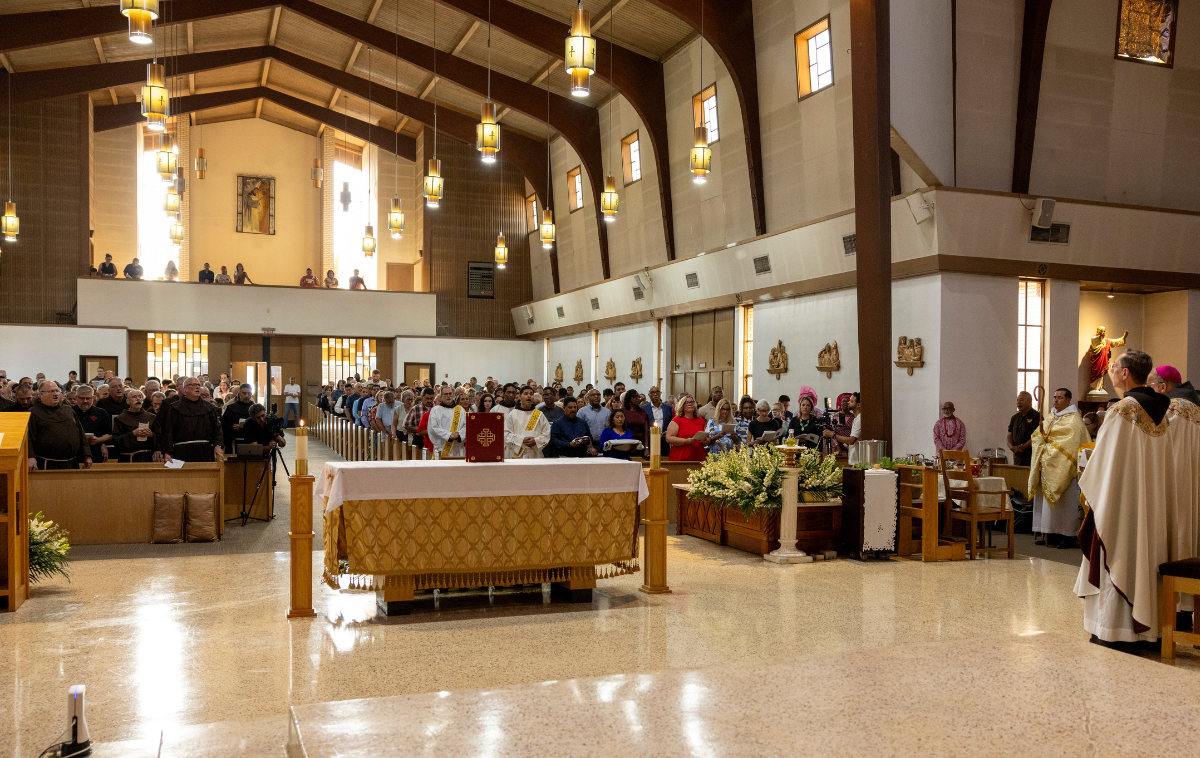
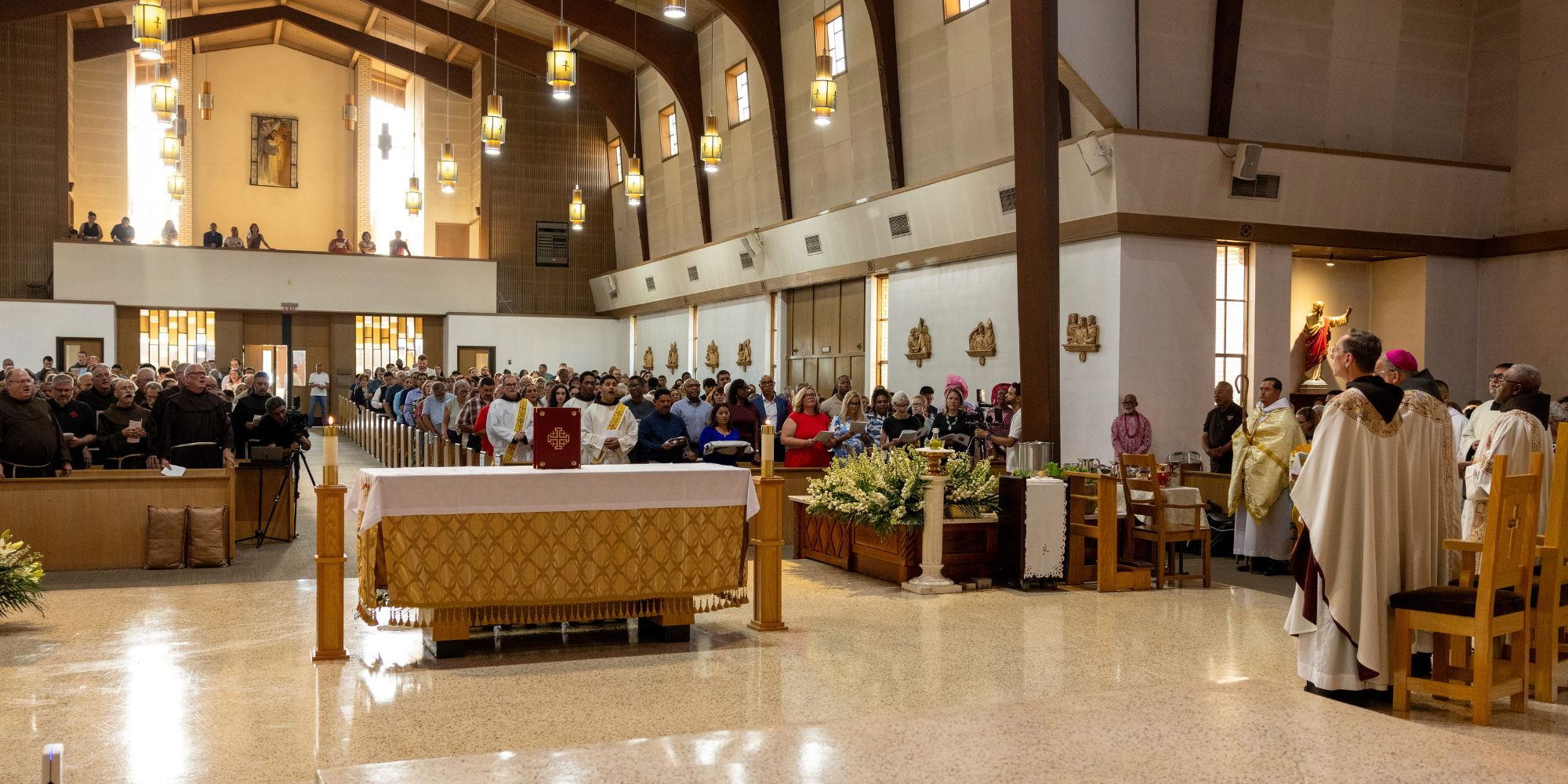
Holy Family Catholic Church in Albuquerque. For some, a pilgrimage is as close as your parish church, or even a reflective spot in your home. (Photo by Br. Octavio Duran, OFM)
1. Visit a place that is sacred to you
A holy place is any site where one experiences God’s presence. It can be a conventional place like a church, or a personal space at home, or in a natural setting. What makes a place holy is not its appearance, but the divine bond felt there.
Your parish church may be a recent discovery, a family tradition or simply your haven. A holy place could also be a community park, beach, mountain vista or even a home shrine.
Last Christmas, Br. Greg placed an easy chair near his Nativity scene in the friary, hoping someone would sit in it.
“That could be a pilgrimage spot for you,” he said. “A pilgrimage is a place, and it doesn’t have to be expensive to get to. It’s a place that helps you get in touch with God that is holy to you, because God and you have an experience of encounter there.”
Try this
If you're visiting a sacred site, consider carrying a small token like a pebble or prayer card, and take a moment to pray whenever you find it in your pocket. This practice is especially fitting during the Jubilee Year of St. Francis, declared by Pope Leo XIV, which runs from January 2026 to January 2027. During this time, anyone who visits a Franciscan church can earn a plenary indulgence.
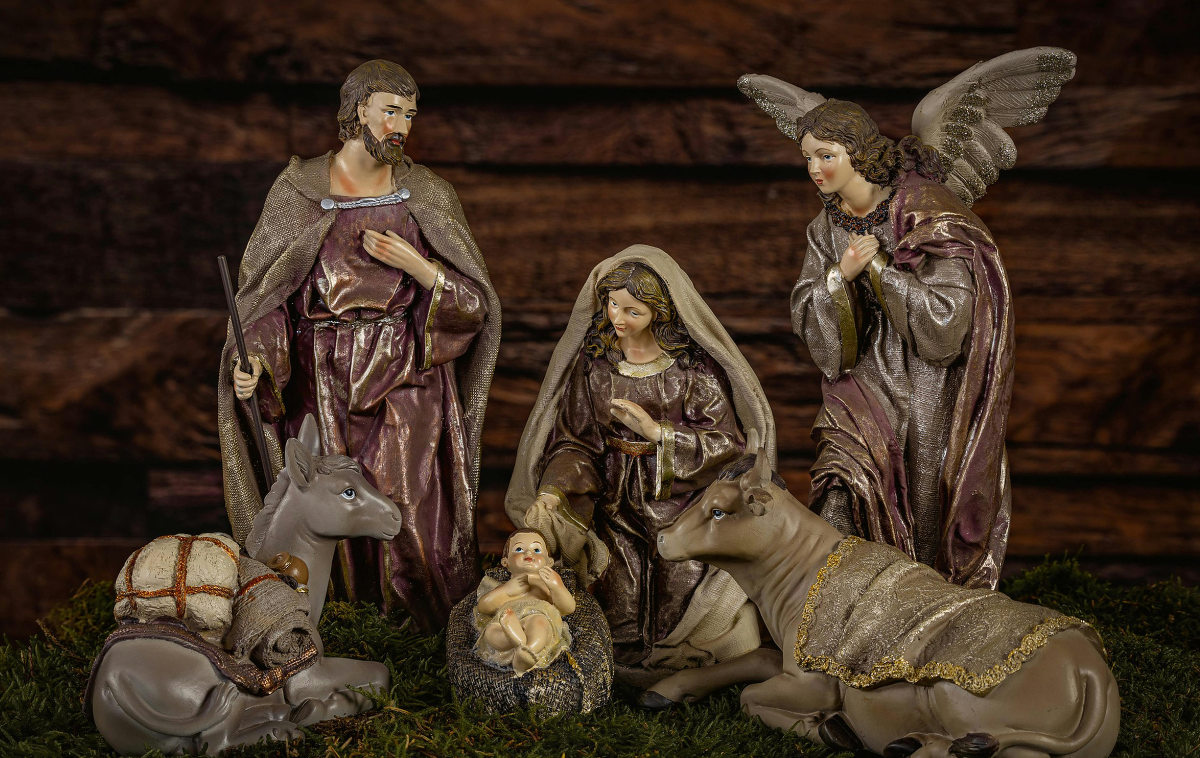
For some, cherished Christmas memories inspire pilgrimage. “It’s a place in my memory,” Br. Greg Friedman said. “Everyone has stories like that.” (Photo by Myriams Fotos/Pexels)
2. Reflect on a time you felt God's presence
After you have arrived at your holy place, find a quiet spot where you can open yourself to God’s presence.
You may wish to begin by reflecting on a story or a memory that has special meaning to you. Br. Greg sometimes recalls the magical feeling of Christmas from his childhood. He remembers decorating his house with lights as a teen, while his uncle arranged music outside connecting a speaker to a record player. Standing across the street at night, Br. Greg created a lifelong memory: “It’s a story, an event that I can connect to, a moment of inspiration,” he said. “Everyone has stories like that.”
Try this
Try recalling a memory of a time when you felt God’s love at work in your life. It could be where you discovered a calling, decided to marry your spouse or played with your children in the park.
Face a window, if possible (or nature outside), breathe calmly, and place your hand on your heart as you reflect on your memory.
<div><p paraid="713497990" paraeid="{95c2ad94-db0c-475c-bcfd-29b4e96f813d}{114}">A pilgrimage is any experience of spirituality or connection with God. As Br. Greg Friedman, OFM, says, “Let God do what God does.” (Photo by Vanderlei Longo/Pexels) </p></div>
3. Seek to encounter God
Pause to listen for God's guidance or his presence. Close your eyes and let your attention shift inward. Let distracting thoughts or ideas go as you seek God’s peace.
“Let God do what God does,” Br. Greg said. “Try to do that without expectations, guilt or shame. If you haven’t prayed in a long time, you might think, ‘God is upset that I haven't prayed in a while.’ God doesn’t work like that. God is happy that you are here now. God meets us in every single moment. That’s what the Scriptures tell us.”
Try this
Come as you are. God is eager to greet you.
“Just say, ‘I’m here, Lord,’” Br. Greg said. “‘I’m putting no conditions on how I want to feel when I leave, I’m just here to be a pilgrim, and to let you show me what you want to show me.’”
... but how can I even start this?
Pilgrimages aren’t bound by liturgical seasons – you don’t need to wait for Christmas or Easter to begin your journey. Are you experiencing grief or uncertainty? Maybe you need a pilgrimage right now.
“It’s part of our humanity,” Br. Greg said. “If you’re going to try a self-pilgrimage, start with who you are. What does it mean to be your age? What does it mean to be at your stage in life? If a beloved grandparent has died, what are the stories you know about that person? What are your feelings about them?
“All of those feelings are part of the pilgrim experience.”
Even anger?
“A good friend used to say, ‘I just tell God how angry I am at him, and I think God’s big enough to take it,’” Br. Greg said.
He reminds us that in the Psalms we often see people ask God questions such as “where are you?” and “why aren’t you here?” Br. Greg believes these feelings are normal and can mark the beginning of a sacred journey.