
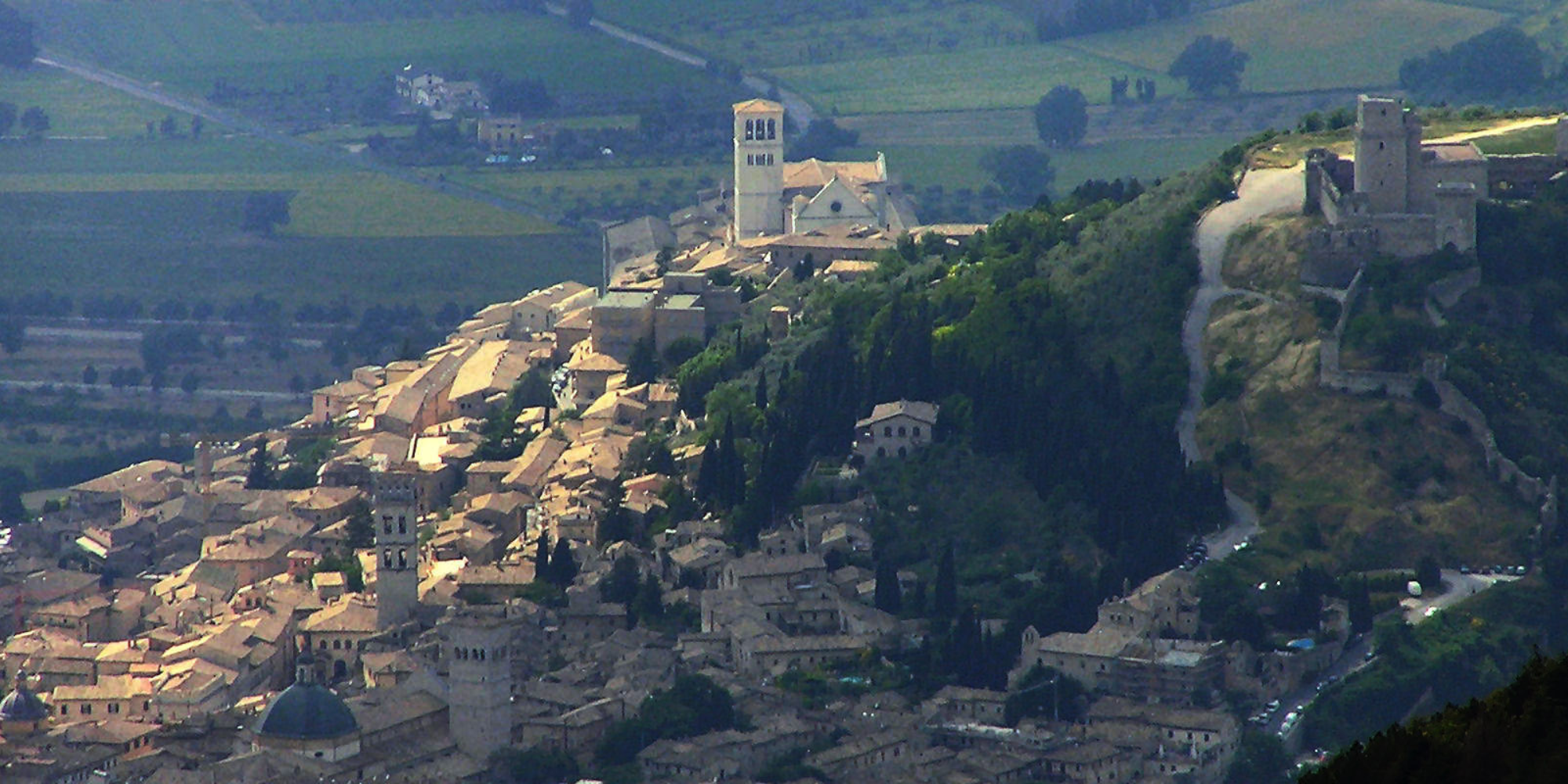
Places to go on pilgrimage during the Year of St. Francis
During this Year of St. Francis, pilgrims are drawn back to the places where the Little Poor One and St. Clare nurtured their faith. These sites are unmistakably Franciscan: modest chapels easily missed, basilicas built to remember, and hillsides that still invite a slower way of walking in a hurried world.
A Franciscan pilgrimage is about more than collecting souvenirs; it’s about moving intentionally, allowing humble, sacred places to awaken and guide your soul.
Pilgrims in Assisi often begin at the Basilica of St. Francis of Assisi, where they visit the saint’s tomb.
(Photo by Berthold Werner, Public domain, via Wikimedia Commons)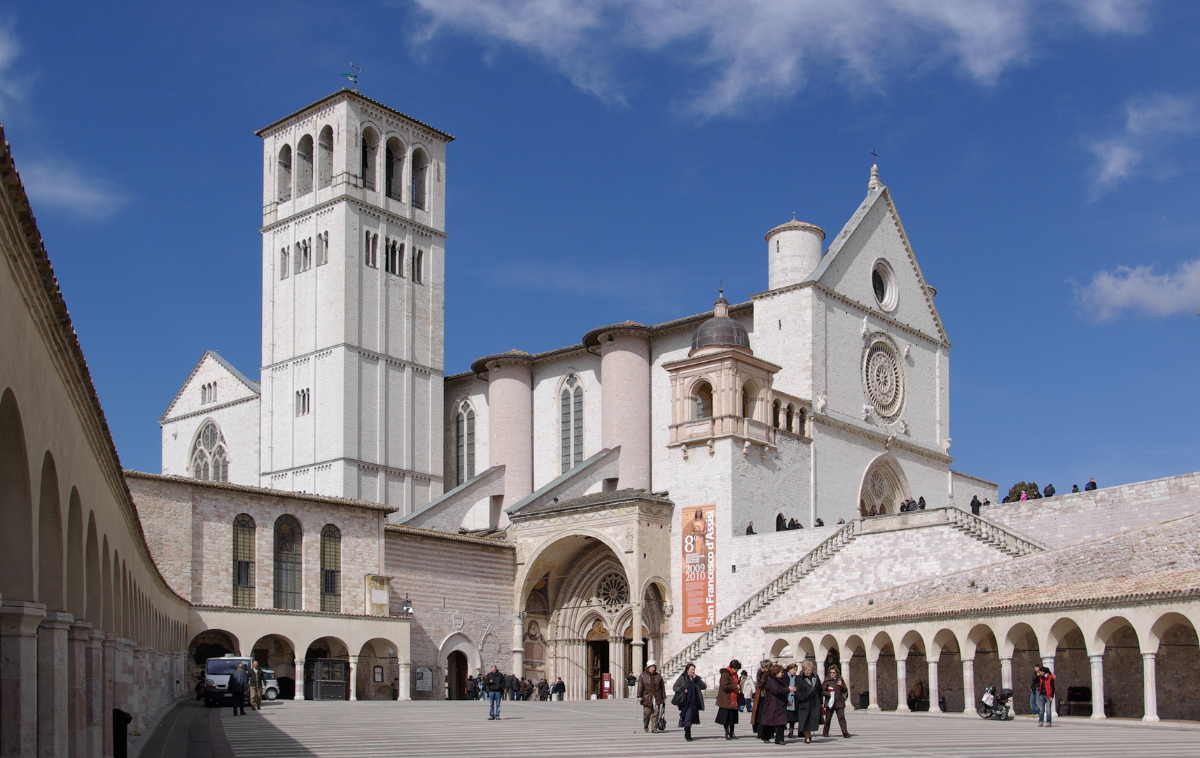
Assisi: Center of the Franciscan pilgrimage
In Assisi, the Franciscan story unfolds at a walkable pace. Rather than rushing between landmarks, pilgrims experience an unhurried journey into the deepening legacy of the Franciscan way of life.
The journey often begins at the Basilica of St. Francis of Assisi, where pilgrims arrive at the saint’s tomb. The crypt invites quiet reflection on a life shaped by simplicity – a beggar’s existence rooted in faith and prayer. It feels less like an ending than an orientation, setting an attentive tone for all that follows.
A short walk away is the Basilica of St. Clare. St. Clare rests there alongside the San Damiano Cross, before which Francis once prayed – and listened – at the dawn of the Order. Clare was not merely Francis’s follower, but his contemporary and central shaper of the Franciscan movement. This place testifies that their witness was never solitary but born of shared spirit and a common response to the Gospel.
That shared faith found its voice at nearby San Damiano, where Francis heard the call to “Rebuild my Church,” and where Clare later founded the first monastery of the Poor Clares. The chapel invites pilgrims to linger, reminding them that renewal often begins not in splendor, but in listening.
A crucial moment follows at the Porziuncola, within the Basilica of St. Mary of the Angels. Here, the Franciscan Order was born; here, too, Francis completed his earthly journey. A sacred space of beginnings and endings together, the Porziuncola embraces the full arc of a life lived in faithful service.
Assisi teaches pilgrims that there is no single way to walk these sacred footsteps, only the invitation to do so attentively, and at one’s own pace.
Beyond Assisi: Other Franciscan places in Italy
If Assisi is the heart of Franciscan pilgrimage, its pulse carries across other tranquil and influential places in Italy.
La Verna’s wooded paths feel quiet from the start. (Santuario della Verna, CC BY-SA 3.0
<a href="https://creativecommons.org/licenses/by-sa/3.0" data-sf-ec-immutable="">https://creativecommons.org/licenses/by-sa/3.0</a>, via Wikimedia Commons)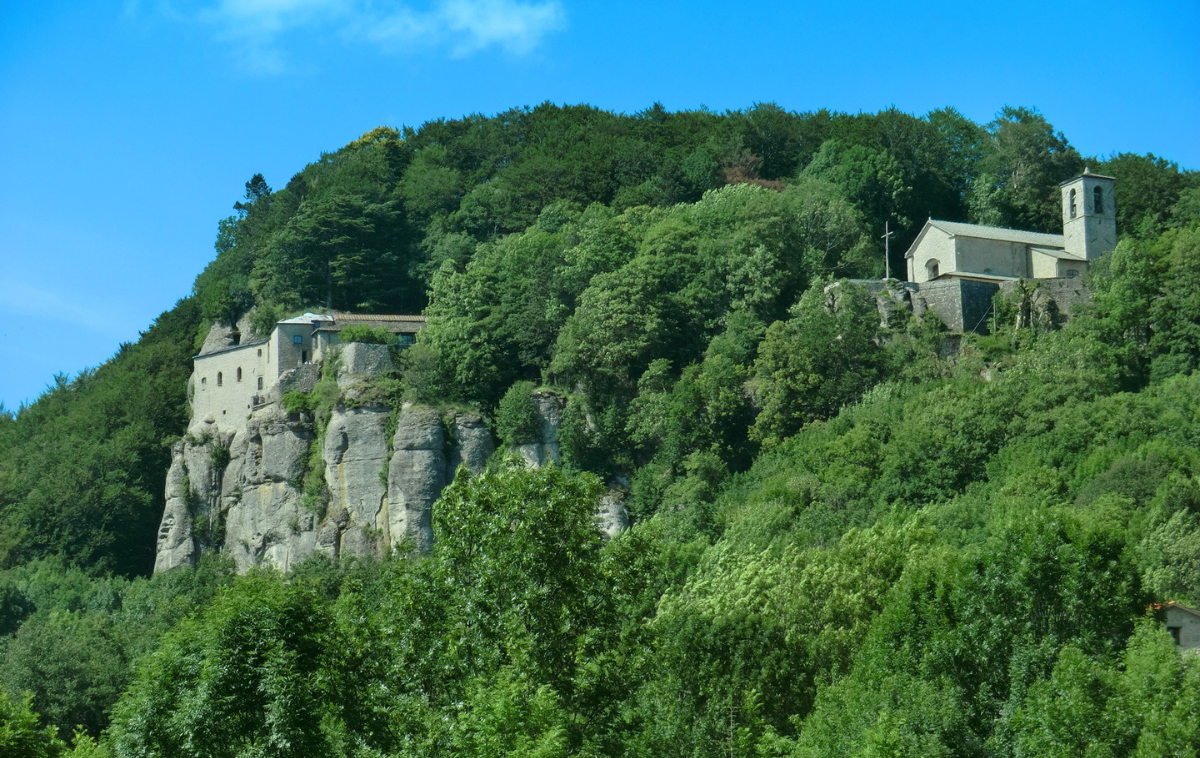
La Verna: Where suffering became blessing
La Verna rises above the forests of the Tuscan Apennines as a natural sanctuary. Here, Francis, during a moment of solitude and prayer, received the stigmata, the five wounds of Christ. These wounds are considered an outward mark of the love that had long formed Francis inwardly.
The hush of La Verna’s wooded paths is immediate. Along the rocky slopes stand narrow chapels carved into stone, unembellished spaces that welcome both faith and a willingness to be changed, body and soul, by love. It is a vulnerable place of pilgrimage, where surrender opens the way to transformation.
Greccio may not have Rome’s grandeur, but it holds a warmth all its own.
(By Fiat 500e - Own work, CC BY 4.0, <a href="https://commons.wikimedia.org/w/index.php?curid=141298416" data-sf-ec-immutable="">https://commons.wikimedia.org/w/index.php?curid=141298416</a>)
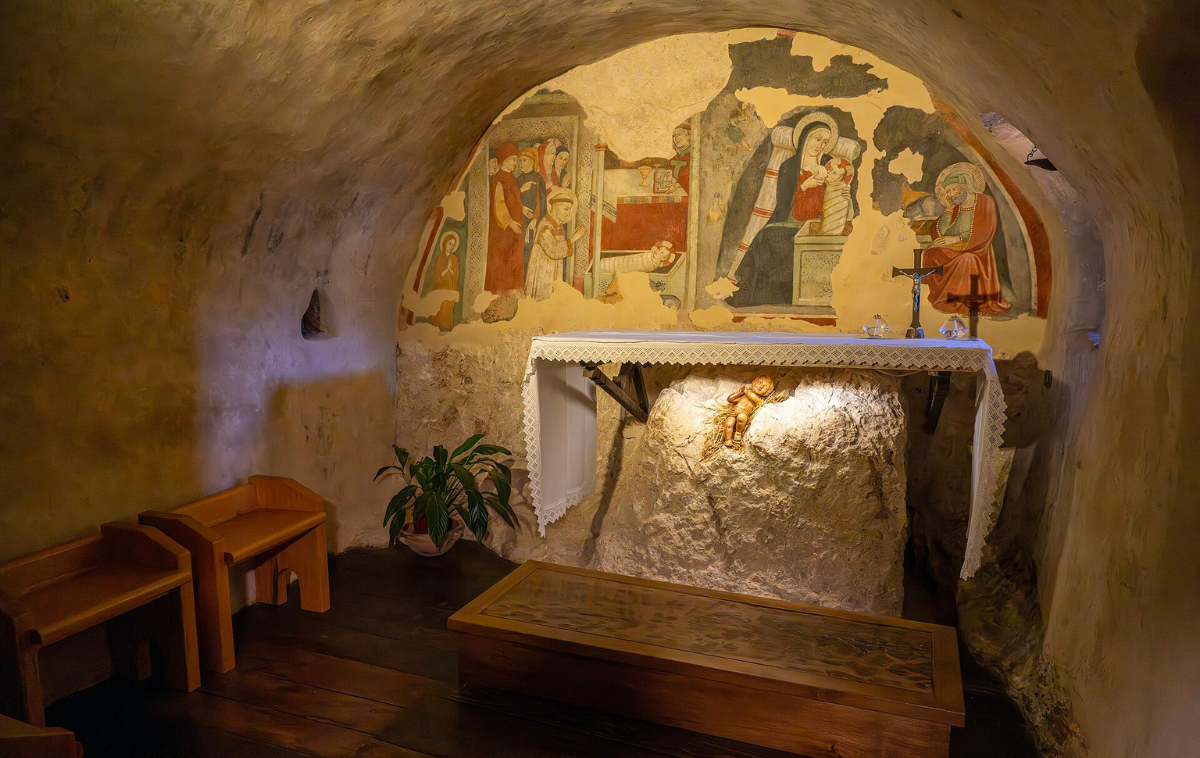
If La Verna speaks of suffering, Greccio speaks of joy freely given. In this hillside town, Francis created the first living Nativity, convinced that seeing the poverty of Christ’s entrance into the world could soften even the hardest heart.
Greccio is not Rome, but it carries a warmth that surpasses grandeur. Wonder comes into focus here, deeply theological yet marked by childlike awe. In the gentle chapel and surrounding friary, Francis shows that God draws near not through force, but through presence. Simplicity and joy travel side by side, and faith finds renewal when we learn to see again.
At
the Basilica of St. John Lateran, St. Francis stood before Pope
Innocent III with no claim to power or place, trusting only in God and
in the Gospel path set before him.
(By NikonZ7II - Own work, CC BY-SA 4.0, <a data-sf-ec-immutable="" rel="noreferrer noopener" target="_blank" href="https://commons.wikimedia.org/w/index.php?curid=101762109">https://commons.wikimedia.org/w/index.php?curid=101762109)</a>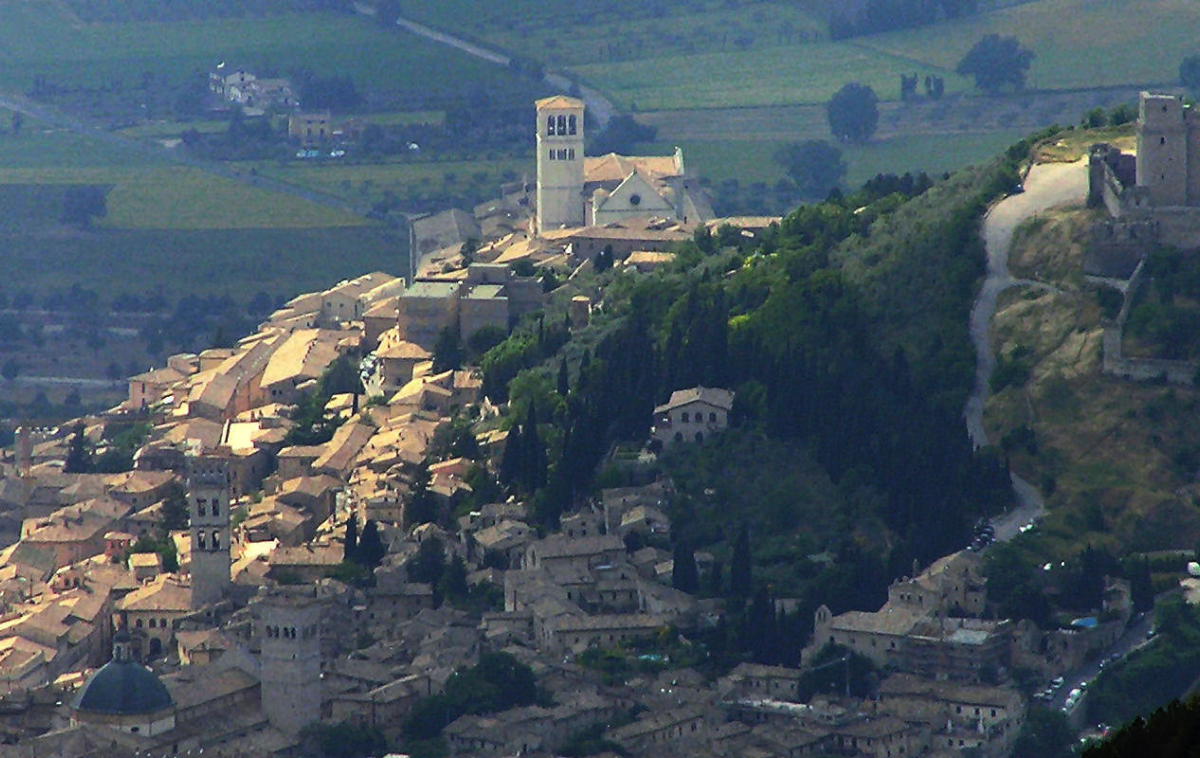
Rome: Where Francis met with the pope
St. Francis’s footsteps eventually led to Rome, as did the questions raised by his way of life. He approached the Basilica of St. John Lateran, the cathedral of the Bishop of Rome and the mother church of Western Christianity, seeking recognition for his calling.
St. Francis stood before Pope Innocent III trusting not in power, persuasion or status, but in God and in the Gospel way of life he had been called to live. Here, St. Francis submitted his Rule for approval, and the Franciscan movement began dialogue with the wider Church, bringing a radical Gospel vision into communion rather than conflict.
Obedience and courage meet here. At St. John Lateran, pilgrims join il Poverello in considering how faith takes root in both humility and courage, devotion and mission.
Ready to walk with Francis?
Not all Franciscan pilgrims will tread the hills of Assisi or gaze in wonder at frescoed ceilings in Rome this Jubilee Year. For all, though, the heart of pilgrimage is within reach. For Francis, it was as simple as turning toward God in familiar places with open hands, an open heart, and an unhurried pace. Explore pilgrimages available from Franciscan Pilgrimage Program, the Province of Our Lady of Guadalupe’s ministry for encounter with spirituality walking in the footsteps of saints.
Wherever the first step falls, pilgrimage in the Franciscan way beckons a quieter trek, one of humility, presence and the simple grace of listening.