
Things you (probably) didn’t know were influenced by the Franciscans
Many people associate St. Francis of Assisi with nature, animals and a simple life of faith. While the founder of the Order of Friars Minor inspired the creation of many Franciscan communities known for selfless acts of charity, hospitality and peacebuilding, there is more to know about the Franciscan influence. Some aspects of the modern world have been touched by the Franciscan movement in ways you might not realize. Below, we share examples of Franciscan connections that might surprise you.
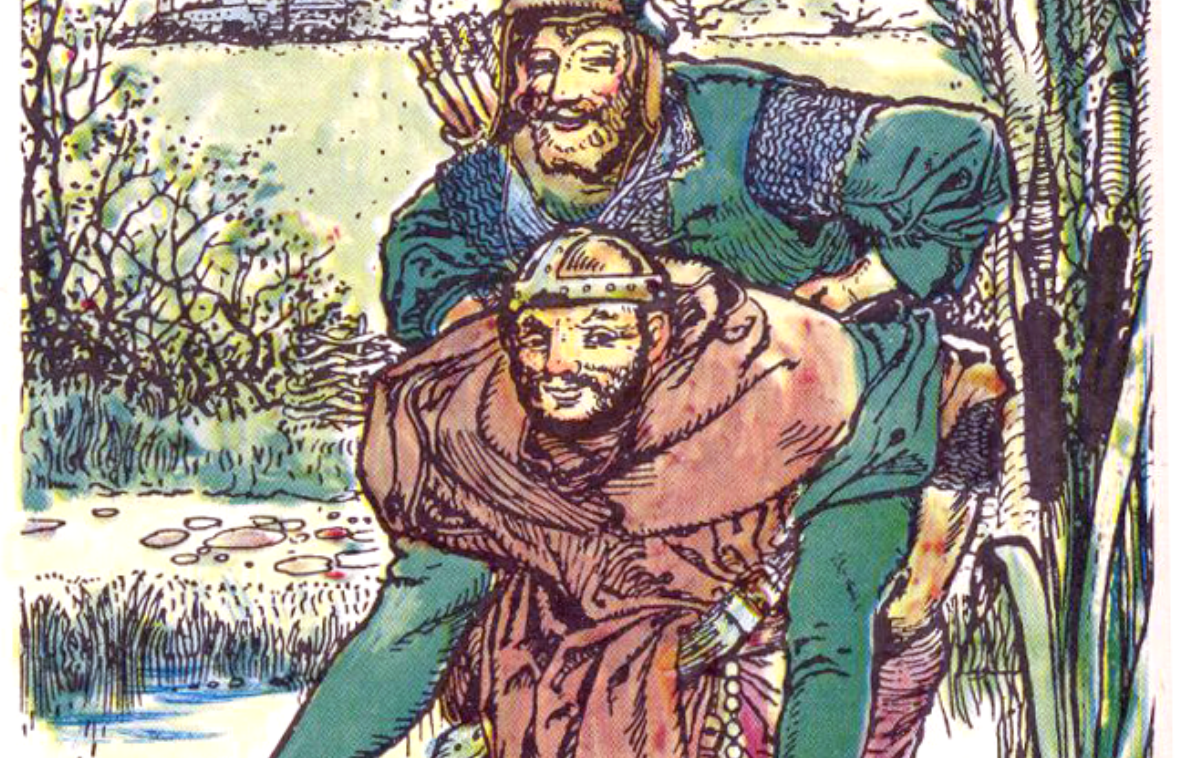
Friar Tuck carries Robin Hood across a river. Frontispiece illustration by Howard Pyle, Public Domain
Media/literary references
Robin Hood’s Friar Tuck is one of the most beloved characters in the Robin Hood legends.
While Friar Tuck is not explicitly identified as a Franciscan in the earliest Robin Hood tales, he is frequently portrayed in later adaptations as a Franciscan friar. He is depicted as a jovial, good-hearted friar who often serves as a moral and spiritual guide. Friar Tuck is also courageous and willing to stand up against injustice. His cheerful personality, closeness to common people and willingness to challenge powerful authorities reflect qualities often associated with the Franciscan tradition.
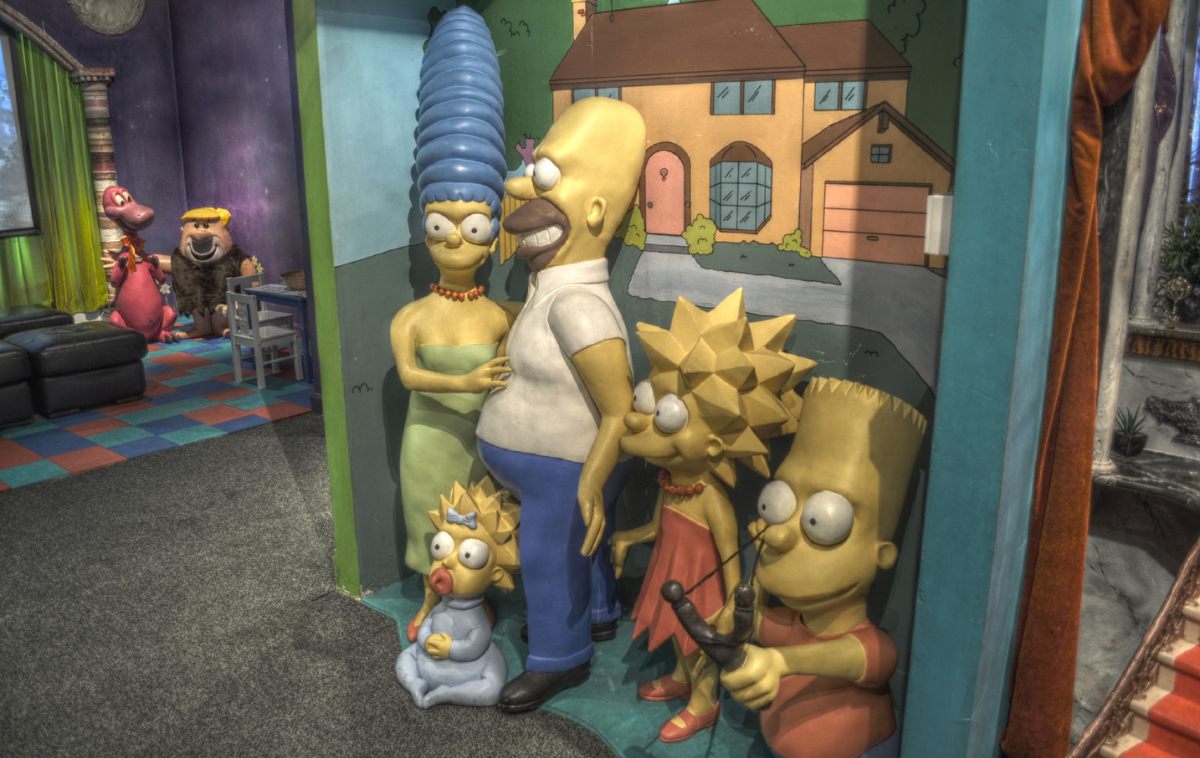
Wax statute of Homer Simpson and his family by Miguel Mendez, Wikimedia Commons
St. Francis of Assisi is referenced in at least two different episodes of "The Simpsons."
1992 - In “Homer the Heretic,” the Simpsons parody one of the most familiar images of St. Francis of Assisi: preaching to the birds. Homer abandons Sunday worship in favor of his own private religion, strolling in his backyard dressed in a brown habit, surrounded by birds and other animals. The scene comically reduces Franciscan spirituality to communion with nature.
2002 - In “Sweet and Sour Marge,” the Duff Beer Book of Records refers to St. Francis of Assisi as “the world’s most overrated saint.” The joke assumes Francis’ extraordinary cultural familiarity.
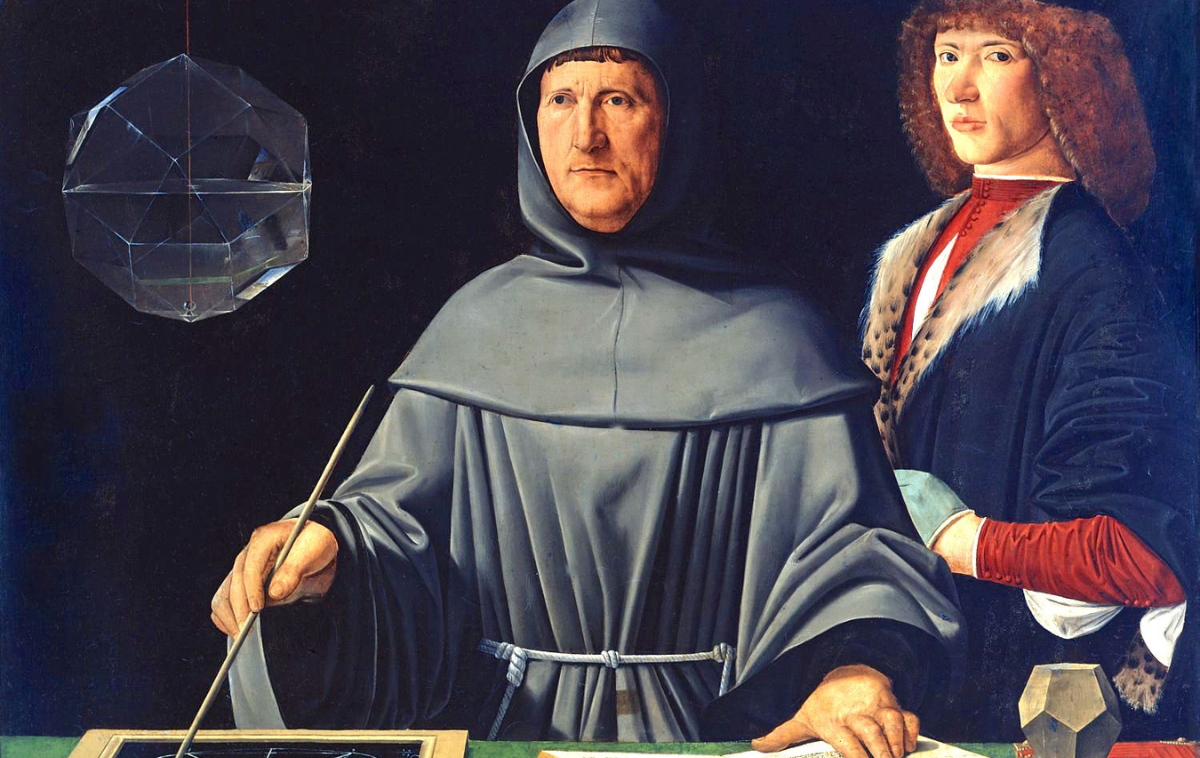
Portrait of Luca Pacioli (1445–1517) with a student, attributed to Jacopo de' Barbari, Public Domain
Impact on math and more
Br. Luca Pacioli, OFM, is a Franciscan friar who is referred to as the father of accounting and bookkeeping.
Br. Luca was an Italian mathematician and an early contributor to the field now known as accounting. He wrote “Summa de arithmetica” in 1494. This was notable for including one of the first published descriptions of the bookkeeping method we still use today.
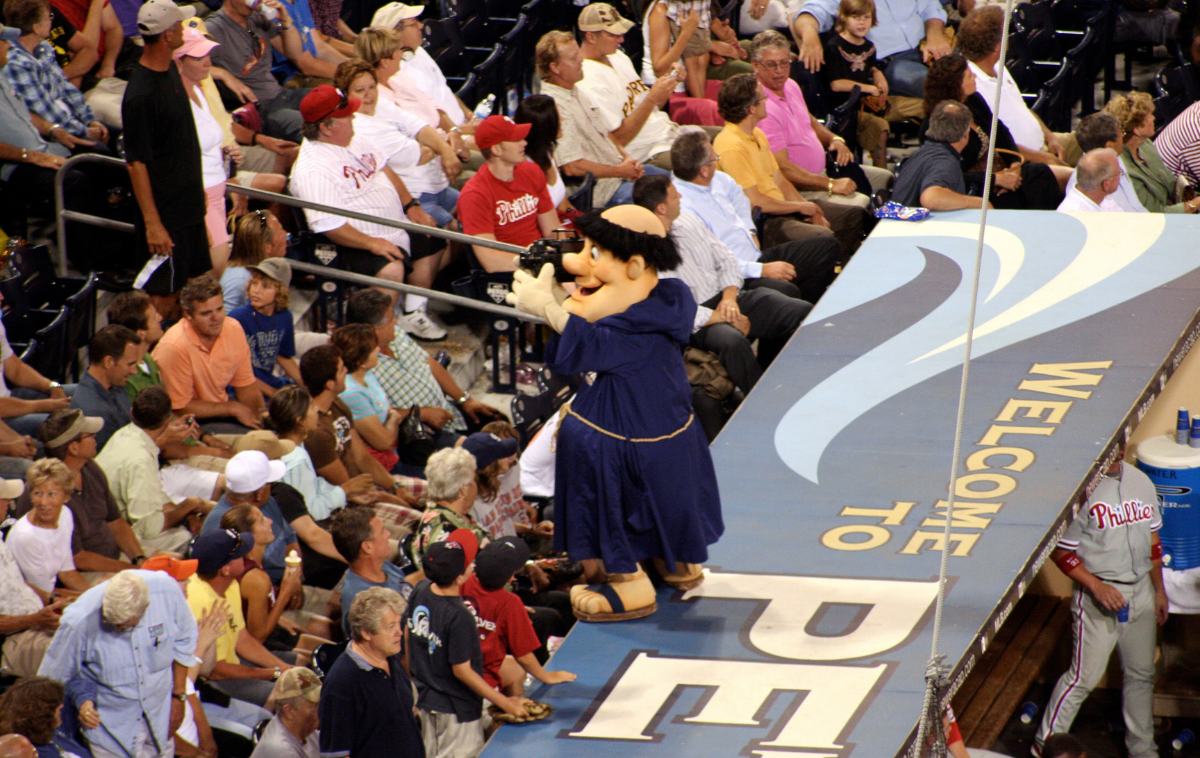
The Swinging Friar, mascot for the San Diego Padres by Ewen Roberts, Wikimedia Commons
Sports teams and mascots
The Padres are the official baseball team for the city of San Diego.
The name “Padres” comes from the Spanish word for “fathers,” honoring the Spanish Franciscan friars who founded San Diego. St. Junípero Serra and other Franciscan friars established the San Diego de Alcalá mission in California in 1769.
Swinging Friar is the official mascot of the San Diego Padres.
The mascot is portrayed as a cheerful, balding Franciscan friar who wears a dark, hooded habit with brown sandals, and he often carries a baseball bat. He is a direct tribute to San Diego’s history, honoring the Spanish Franciscan friars who established the city’s first mission. Immediately following a Padres home game win, the friar rings a massive mission bell located at the ballpark.
.png?sfvrsn=7b19f7eb_1)
.png?sfvrsn=e71d040c_1)
Places with a Franciscan namesake
Three of the largest cities in the U.S., home to about seven million residents, have a connection to St. Francis.
Franciscan friars from Spain arrived in the United States in the late 1500s. As they traveled throughout Florida, Texas, California and other parts of the U.S., they founded missions and communities with namesakes that are explicitly Franciscan.
Los Angeles – The original and full name of the City of Angels is “Pueblo de Nuestra Senora la Reina de Los Angeles de Porciúncula,” which translates to "The Town of Our Lady the Queen of the Angels of Porciúncula.” The Porciúncula (or Portiuncula in Latin) is a small chapel just outside Assisi, Italy, and a sacred site in the Franciscan tradition. St. Francis of Assisi restored the neglected chapel in the early 1200s and made it the center of the early Franciscan movement.
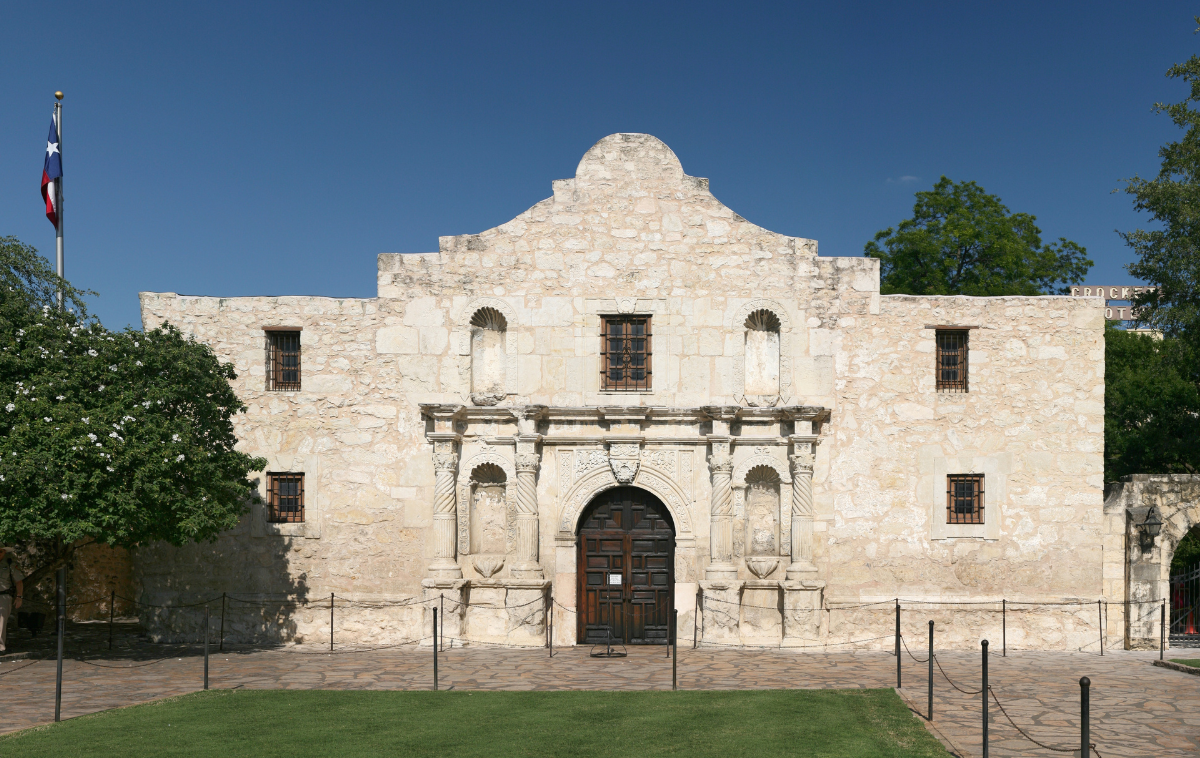
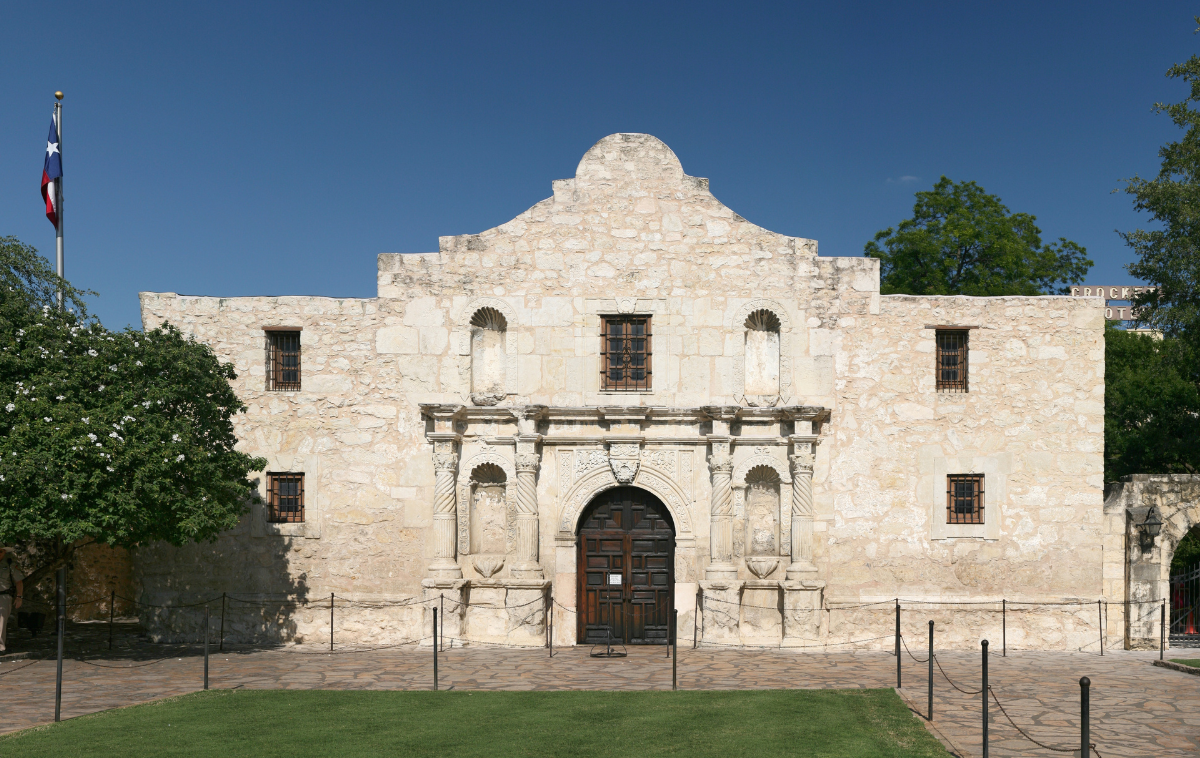
San Antonio – This Texas city was named in honor of St. Anthony of Padua, a Franciscan friar and early follower of St. Francis. The naming dates to June 13, 1691, when a Spanish expedition to the area led by Governor Domingo de Terán and Franciscan chaplain Father Damián Massanet made camp along a river. Because June 13 was the feast of St. Anthony, Father Massanet suggested naming the river Río San Antonio. Also, the Alamo, located in San Antonio, was a Franciscan mission before it became a fortress and the site of a famous battle. Read more here.
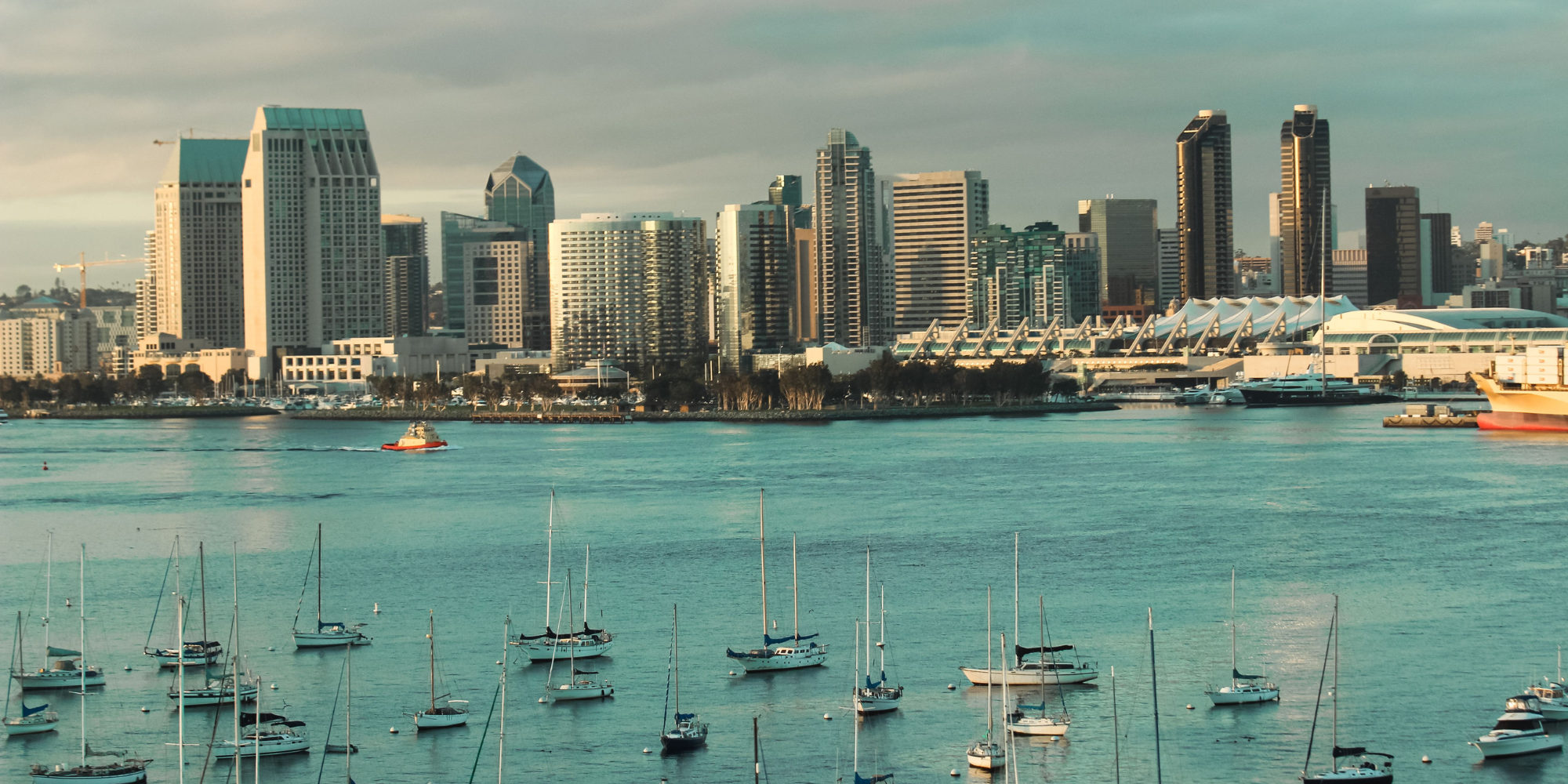
San Diego – The city’s name can be traced to the 17th century, when Spanish explorer Sebastián Vizcaíno named the bay and the surrounding area “San Diego de Alcalá” in honor of St. Didacus, a 15th-century Spanish Franciscan lay brother. Diego is the Spanish form of the Latin name Didacus. Known for his humility, miracles and dedication to the poor, St. Didacus was canonized in 1588 — just 14 years before the naming of San Diego Bay.
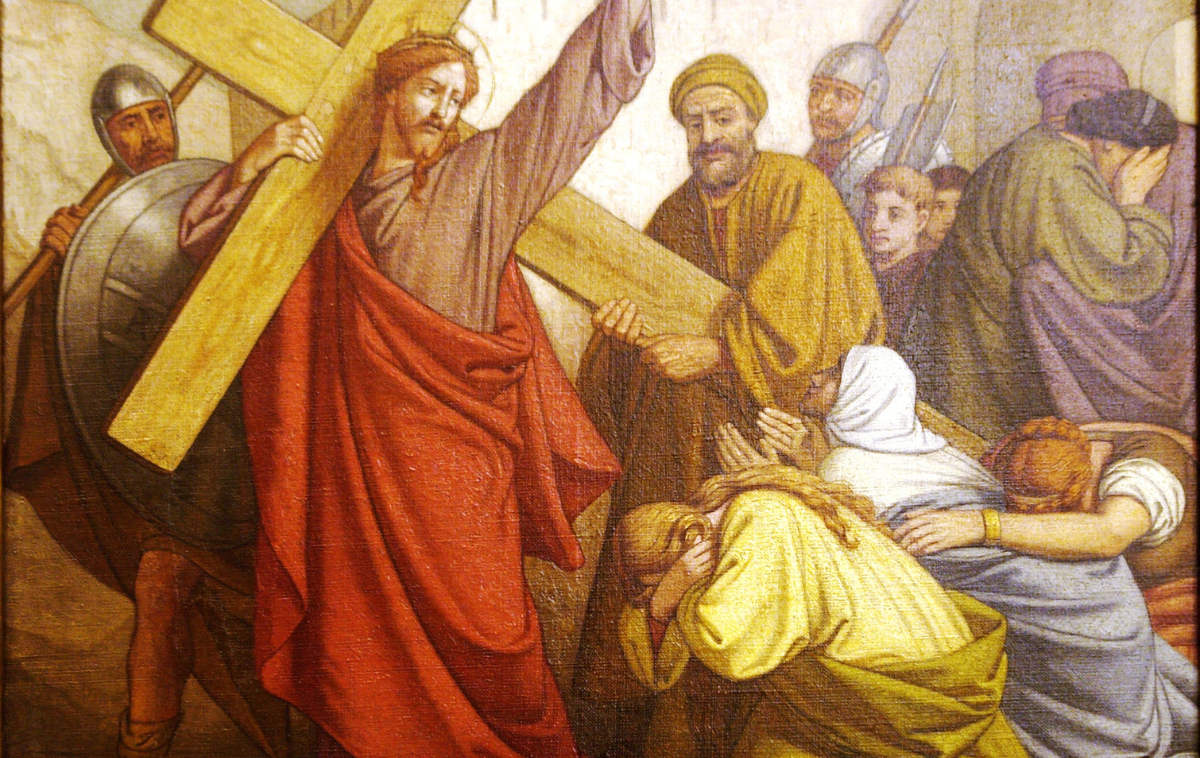
Stations of the Cross number eight, Jesus meets the daughters of Jerusalem. © Yann Forget, CC-BY-SA, Wikimedia Commons
Catholic connections
Stations of the Cross
The Franciscan Order was granted custody of the sacred sites in the Holy Land in 1343, and the friars ministered to the Christian pilgrims who visited. However, travel from Europe to Jerusalem was a hazardous journey, so friars built shrines throughout Europe that depicted the via Dolorosa, meaning “the way of sorrow,” as Jesus walked to Calvary for his crucifixion. This spread devotion to the 14 Stations of the Cross we find in Catholic churches today.
The Angelus
In 1219, St. Francis wrote a letter to leaders, mayors, judges and governors across the world encouraging them to sound bells for prayer throughout the day as he had seen the Muslims do in the Middle East. Many regard this to be the origins of the Angelus.
Manager/Nativity scene
Because of his great devotion and reverence for the incarnation of Jesus Christ, St. Francis of Assisi created the first live Nativity scene in 1223 in Greccio, Italy. This helped people to visualize the humble, poor conditions of Jesus’ birth and increase their spiritual devotion. Biographers of Francis report that he used only a straw-filled manger (feeding trough) set between a real ox and donkey.
Br. Gilberto Cavazos González, OFM, contributed to this article.