
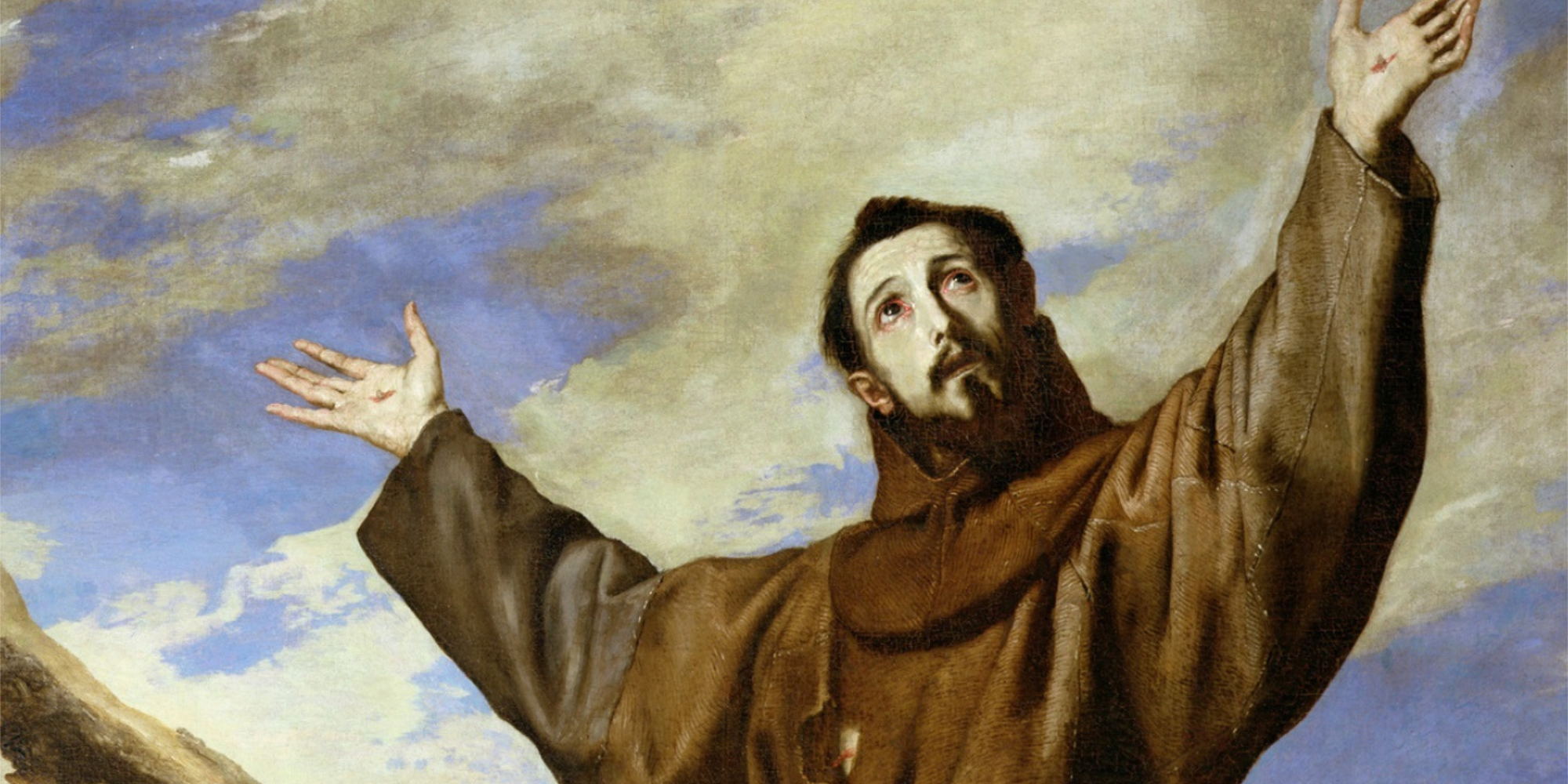
What is St. Francis’ legacy?
Eight hundred years have passed since St. Francis of Assisi completed the mission God gave him on earth. His life started in a small hill town in central Italy, and his influence has spread throughout continents and across oceans. During this Jubilee Year of St. Francis and month of St. Francis, we ask a probing question: what is this humble saint's greatest legacy to humankind?
Four friars with extensive education on theology, history and Franciscan spirituality pondered that question and two themes surfaced time and again: community and connection.
Bringing the world closer together
“The legacy of St. Francis is in community and that community is with the whole earth. It’s community with creation rather than simply with people or rather simply in the Church,” said Br. Jack Clark Robinson, OFM, executive director of the Santa Barbara Mission Archive-Library in Santa Barbara, California.
During a two-week pilgrimage to Assisi, Br. Jack sat at St. Francis’ tomb and watched as travelers from around the world visited the sacred place to encounter a saint they find both relatable and remarkable.
“I saw every description of old, young, every description of ethnicity, every description of religious. It was so colorful to watch people come through, whether they were Catholic, whether they were Christian, whether they were Hindu, whether they were Sikh, whether they were Muslim, whatever they were, Francis created a community that engaged them,” said Br. Jack.
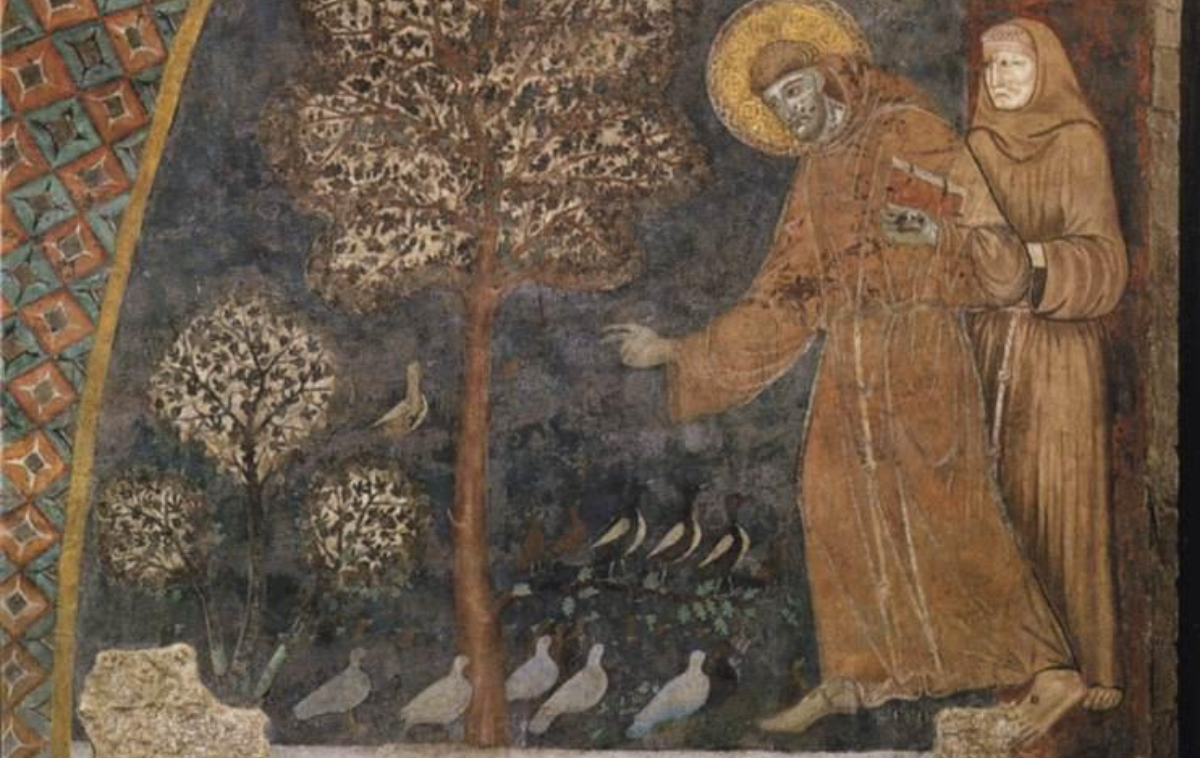
Francis Preaching to the Birds by Giotto di Bondone shows a core tenet of Franciscan spirituality: the profound interconnectedness and harmony between humanity and all of God's creation, viewing animals as "little sisters and brothers." (Public Domain)
Embracing our humanity
When reflecting on St. Francis’ legacy, Br. Keith Warner, OFM, points out that St. Francis taught us a new way of being Christian. Br. Keith, president of the Franciscan School of Theology at the University of San Diego, says that new way involves loving our own humanity and seeing the humanity of others.
“St. Francis showed us the importance of our humanity and embracing our humanity, our sense of relatedness, our sense of being brother and sister together with all the created reality. By embracing our humanity and our social and ecological relatedness, that is how we respond to God’s love,” said Br. Keith.
The appeal of this message and example have endured for generations.
“The example of his witness, faithfulness, dedication and desire to love and be loved and form fraternities of love, is part of the reason why he still speaks to our age as he’s spoken to many ages,” said Br. Keith.
He also highlighted how other religions look to St. Francis as someone to emulate.
“Buddhists describe him as a Bodhisattva, an enlightened being, and it's a way of recognizing that he was really an exceptional human being,” said Br. Keith.
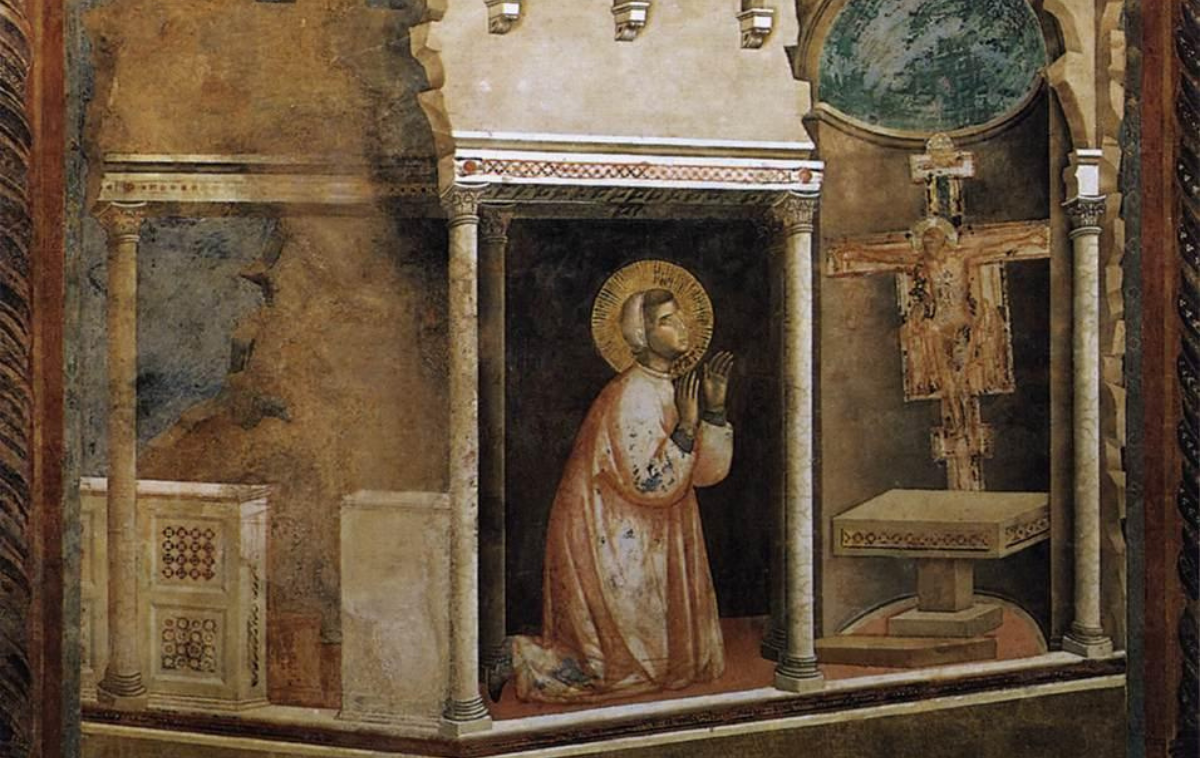
The Miracle of the Crucifix fresco by Giotto di Bondone depicts St. Francis of Assisi hearing the voice of Jesus Christ speaking to him to "repair my house" from a painted crucifix. (Public Domain)
Original goodness
Br. Jim Sabak, OFM, academic director of the Master of Theological Studies at FST, believes that St. Francis’ emphasis on original goodness (man and woman were created as good in God’s image) reminds people that finding common ground and, ultimately, peace is possible.
“He brought people together, including parties that were at war or people who were thinking so differently from each other, they felt as though they could never have any kind of mutuality or any kind of conversation,” said Br. Jim.
St. Francis knew that humanity could not thrive or flourish if it was not reconciled.
“Reconciliation first begins with each other. And then from that realization, it expands to the sense in which we are now more a part of God and God's life and God's purpose on this earth,” said Br. Jim.
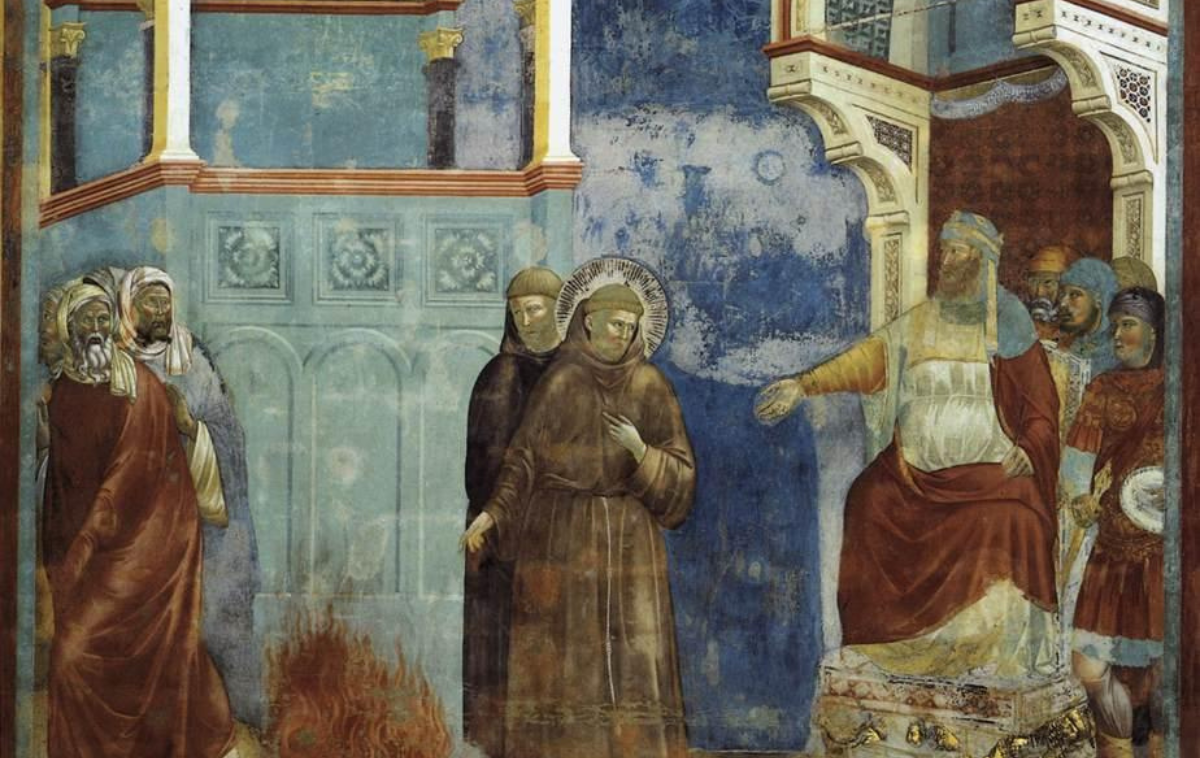
The fresco St. Francis before the Sultan by Giotto di Bondone depicts St. Francis speaking to a Muslim leader – a bold act of encountering someone considered an enemy. (Public Domain)
Universal fellowship
Br. Gilberto Cavazos González, OFM, a scholar/professor of Christian spirituality rooted in the Franciscan and Clarian traditions, described St. Francis’ legacy as helping us to value universal fellowship.
“He gave witness to universal fellowship in the midst of a world that would rather build walls than tables,” said Br. Gilberto, who currently holds the John Duns Scotus Endowed Chair in Franciscan Spirituality at Catholic Theological Union in Chicago.
One example of this witness is an encounter he had with Sultan Malik al-Kamil in Egypt.
“He and the sultan came to realize they’re worshiping the same God in two different ways. They weren't able to convert each other, but maybe it's because they realized that's not what we're about. We're about building fellowship,” said Br. Gilberto.
St. Francis also encountered those on the margins, including lepers and people previously ignored or shunned by religious leaders.
“Fellowship with the poor is something that we obviously highlight. But Francis wasn't afraid of fellowship with the wealthy either. His fellowship with the nobles was not self-serving. It was in the service of the lessers, of the truly lesser,” said Br. Gilberto.
When St. Francis founded the Order of Friars Minor, he chose the name to emphasize the brothers would be in the second class, realizing nobody wants to be second class.
“We accept the position between the haves and the have-nots because Francis wants us in the middle so that we can bridge the first and the third class, so we can bridge the haves and the have-nots. It's not just about living a pious spiritual life; it's about working for the connection between two opposites that would probably never see each other as brothers and sisters.”
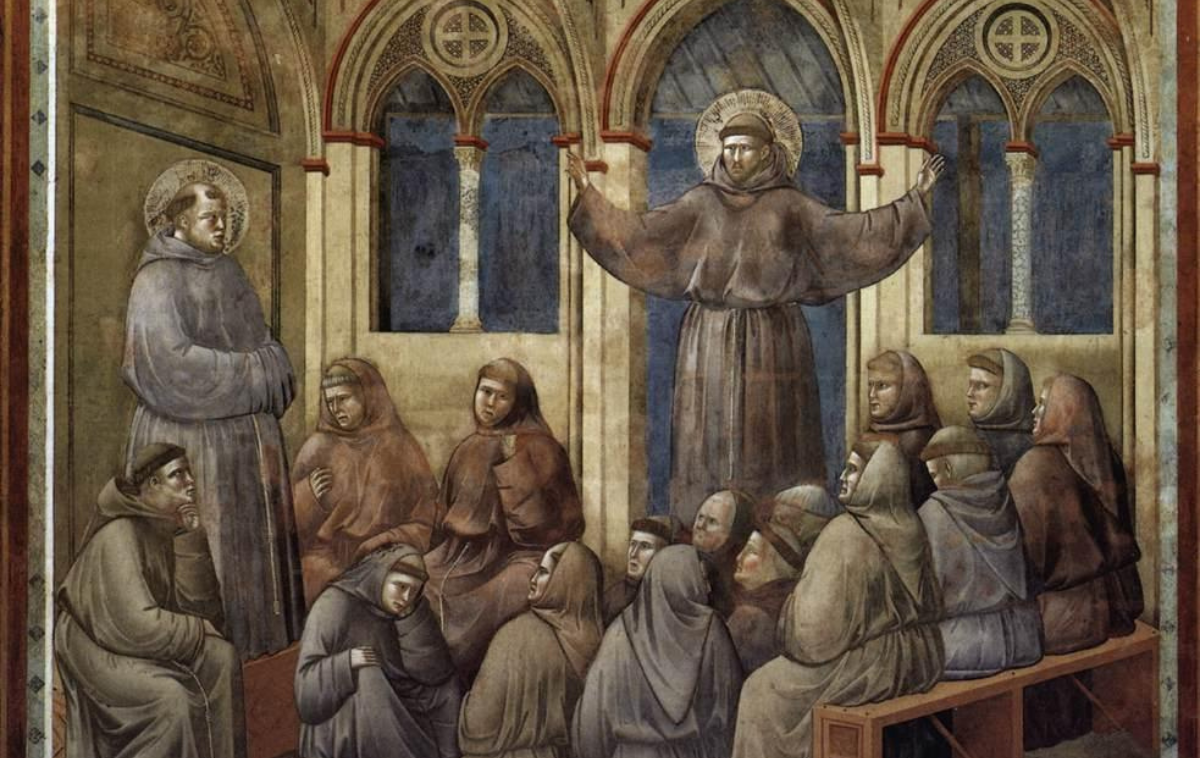
St. Francis Appearing at the Chapter of Arles by Giotto di Bondone depicts a miraculous event where St. Francis appears with outspread arms to bless a gathering of friars while St. Anthony of Padua is preaching. (Public Domain)
Contributing to the good
As a builder of community and connection, the Order of Friars Minor (to which the Province of Our Lady of Guadalupe belongs) and all the associated religious and secular orders he inspired are also described as one of St. Francis' enduring legacies.
“Francis of Assisi sought to found a community of brothers, and then with Clare, a community of sisters, and between the two of them, how many hundreds of thousands of people have given their lives in service of their sisters and brothers in prayer and in service? And how many millions of people have those lives touched in a positive way? Not to say we’ve always been perfect, not to say that we’ve always done everything right, but over and over and over again, what we have done has contributed to the good,” said Br. Jack.