
A love that grows in understanding: What we can learn from the Georgia Martyrs
On Oct. 30, 2026, the eve of the beatification of the Georgia Martyrs, Minister Provincial Br. Michael Perry, OFM, of the Province of Our Lady of Guadalupe gave the following homily during Solemn Vespers at the Cathedral Basilica of St. John the Baptist in Savannah, Georgia.
My brothers and sisters, in the words of St. Francis, “May the Lord give you peace!”
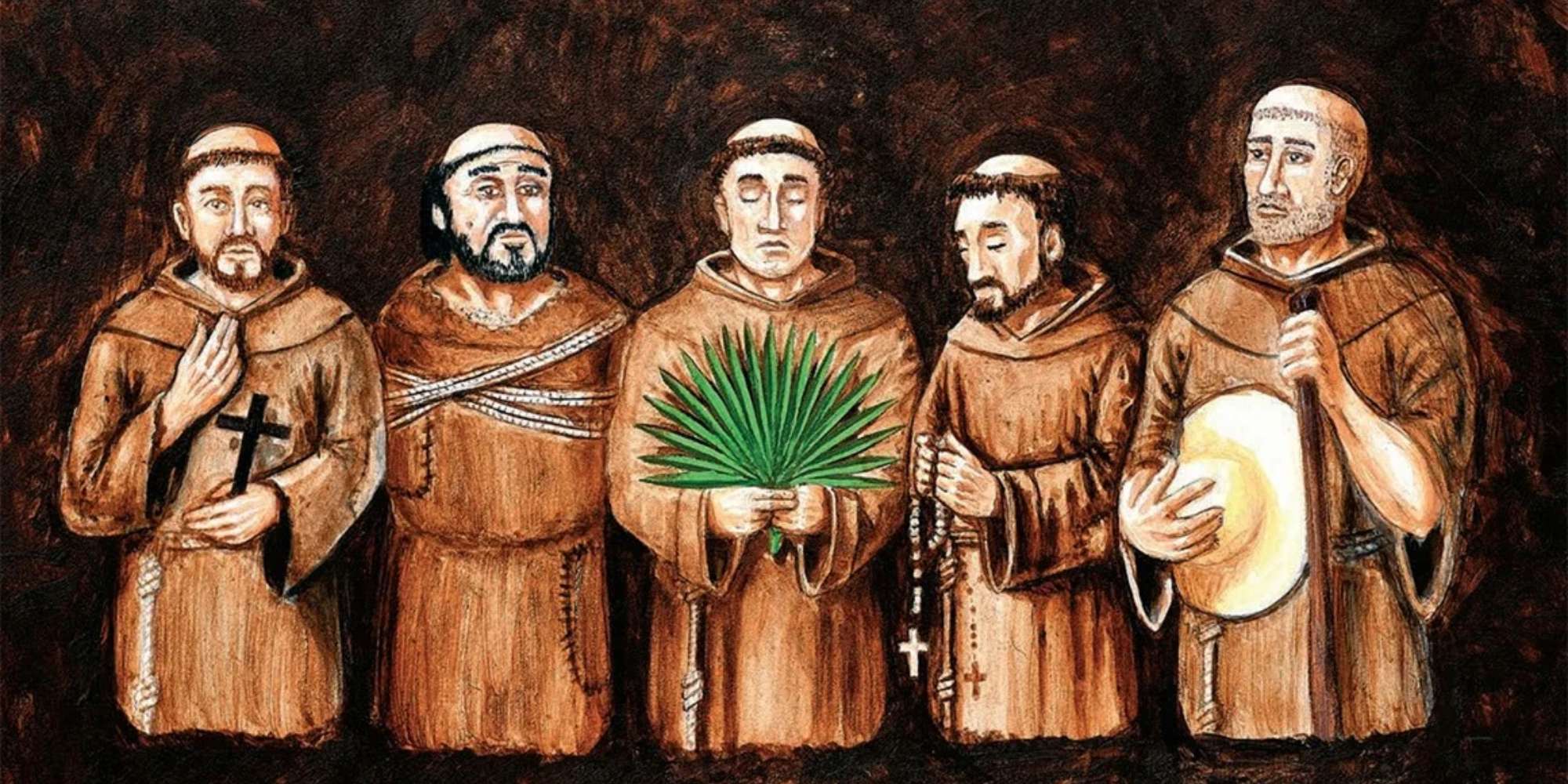
Tomorrow, the Church will beatify five Franciscan friars who died on the coast of Georgia in 1597: Pedro de Corpa, Blas Rodríguez, Miguel de Añón, Antonio de Badajoz, and Francisco de Veráscola. They were my brothers in the Order, and I want to speak of them honestly and with love. And I want us to ask the question that matters most: what can we learn from the Georgia Martyrs? Mañana la Iglesia beatificará a cinco hermanos franciscanos martirizados en Georgia en 1597, y queremos preguntarnos qué nos enseñan.
They came from Spain to live among the Guale people. They learned their language, prayed with them, and gave their lives to them. They were men of their time, sent within the world of the Spanish crown, and they held firmly to what the Church taught. When a baptized young leader named Juanillo sought to take a second wife, as his people’s custom allowed, they told him that as a Christian he could not, and that they could not support his becoming chief if he did. They believed the Gospel demanded something of him, and they would not pretend otherwise. Vivieron entre los guale, aprendieron su lengua y, fieles a la enseñanza de la Iglesia, no callaron lo que creían que el Evangelio pedía.
We cannot know all their intentions, sensibilities, or understandings. But this we do know: mission does not begin with us. It begins in the heart of God, who sends his Son and his Spirit into the world, and the Spirit always arrives before the missionary, already at work in a people, their culture and their longing for God. That is why all Christian mission begins with respect for the dignity, the goodness and the freedom of those among whom we are sent. As St. John Paul II put it, the Church proposes; she imposes nothing. Aunque no conozcamos todas sus intenciones, sabemos que la misión nace en el corazón de Dios y que el Espíritu llega antes que el misionero; por eso toda misión comienza con el respeto a la dignidad, la bondad y la libertad del otro.
Notice the word St. Francis chose when speaking about mission. When he wrote about brothers going to people of another faith, he did not say they should go to them. He said they should go among them. And he told them how: “not to engage in quarrels or disputes, but to be subject to every human creature for God’s sake, and to acknowledge that they are Christians,” and then, “when they see that it pleases the Lord, to proclaim the word of God.” Francis would not even allow one of his brothers to be called “prior.” All were to be called lesser brothers. We do not go as lords, carrying the truth down from above. We go as brothers, standing beside others in a mutual relationship of love, where we receive and where we share. Francisco envió a sus hermanos a ir entre los pueblos, no como señores ni maestros, sino como hermanos menores que ofrecen el Evangelio sin imponerlo.
The story of the Georgia coast is a hard one. The friars were brutally murdered. In the aftermath, due to political intrigue and later colonial reaction, Guale villages and fields were destroyed, and the Guale people suffered terribly. There is grief on both sides. We hold all of it together and offer it to the Lord in this Eucharist since it is the crucified Lord Jesus who is willing to assume all the suffering of humanity and the Earth. La historia termina en dolor por ambas partes: los frailes asesinados, los pueblos guale quemados y sus vidas nunca más las mismas.
So why do we remember these brothers, sent from Spain to La Florida? Not because they were perfect human beings. None of the saints were perfect. We remember them because, when warned of danger, they chose not to run. Miguel and Antonio celebrated Mass and stayed. Blas did not curse those who killed him; he grieved for them. And we remember the Guale Christians who tried, at the risk of their own lives, to spare the friars. In that terrible hour, the friars stayed with the people they had come to love, as a shepherd stays with the flock. Los recordamos no por ser perfectos, sino porque no huyeron, no maldijeron a sus asesinos y no abandonaron al pueblo que amaban; y recordamos también a los cristianos guale que intentaron salvarlos.
Another story of martyrdom comes to mind, where the same choice had to be made: stay or run. Christian de Chergé, prior of a small Trappist monastery in Algeria, lived with his monks as neighbors and friends among Muslim villagers. As violence spread, they chose to stay. In a testament written before he was killed in 1996, he refused to let his death be used to condemn the Algerian people or Islam. He turned to the man who would take his life, called him his “last-minute friend,” and hoped they might meet again in paradise, “if it please God, the Father of us both.” This is the love St. Francis of Assisi carried unarmed across the battle lines to the Sultan at Damietta, Egypt. It does not deny what is happening. It simply refuses to let violence have the last word about who the other person is. Como el hermano Christian de Chergé en Argelia y San Francisco ante el sultán, el amor verdadero no deja que la violencia diga la última palabra sobre el otro.
Paul prays today that our love “may increase ever more and more in knowledge and every kind of perception.” Love that stops growing can harden into control; love that keeps growing learns to see the other as God sees them. And in the Gospel, Jesus heals on the Sabbath and reminds the experts of the law that the law is there to serve the person, never the other way around. Pablo pide que el amor crezca en conocimiento, y Jesús recuerda que la ley está al servicio de la persona.
So what can we learn from the Georgia Martyrs? To hold fast to the truth, and to love even unto death. Few of us will be asked to shed our blood. But in this same letter Paul speaks of being “poured out like a libation” for the faith of others, and that is asked of every one of us. Where are we tempted to run? From the migrant whose language we do not speak, from the young person who has walked away from the Church, from the neighbor whose culture or politics we find hard to bear? The mission entrusted to us asks us to stay: to listen before we speak, to accompany before we correct, to let go of ourselves little by little so that God’s love can grow in us and reach others through us. Los mártires nos enseñan a ser fieles a la verdad y a derramar nuestra vida por los demás, yendo hacia ellos como hermanos y hermanas, con humildad, escucha y acompañamiento.
May these five brothers, and the Guale people they came to serve, pray for us, that our love may grow wiser, gentler, and more patient, trusting that it is God who will bring to completion his mission in the world, which he has placed in our hands. Pedimos que estos cinco hermanos y el pueblo guale intercedan para que nuestro amor sea más sabio, más tierno y más paciente, confiando en que es Dios quien llevará a término su misión en el mundo, que ha puesto en nuestras manos.
Amen.